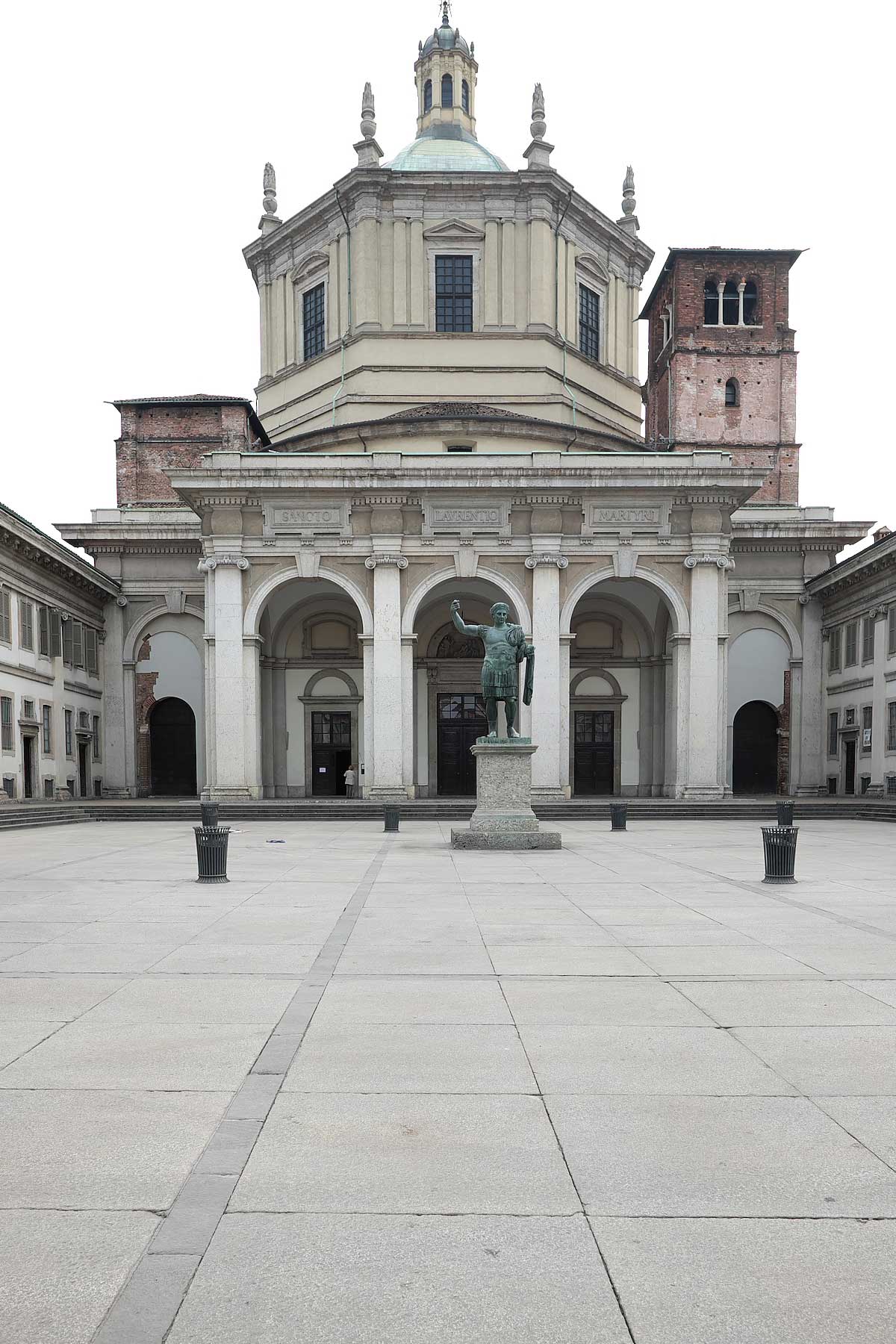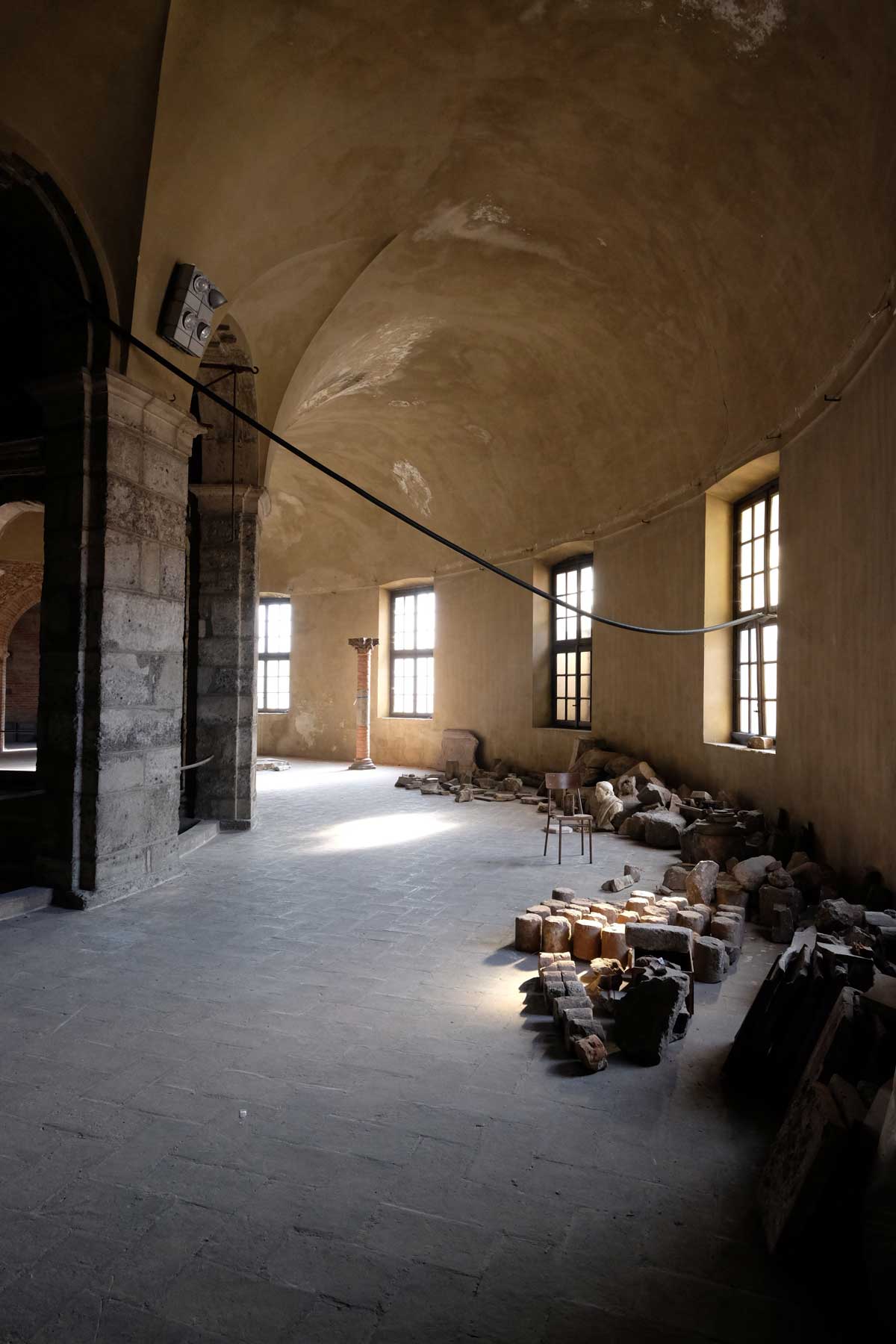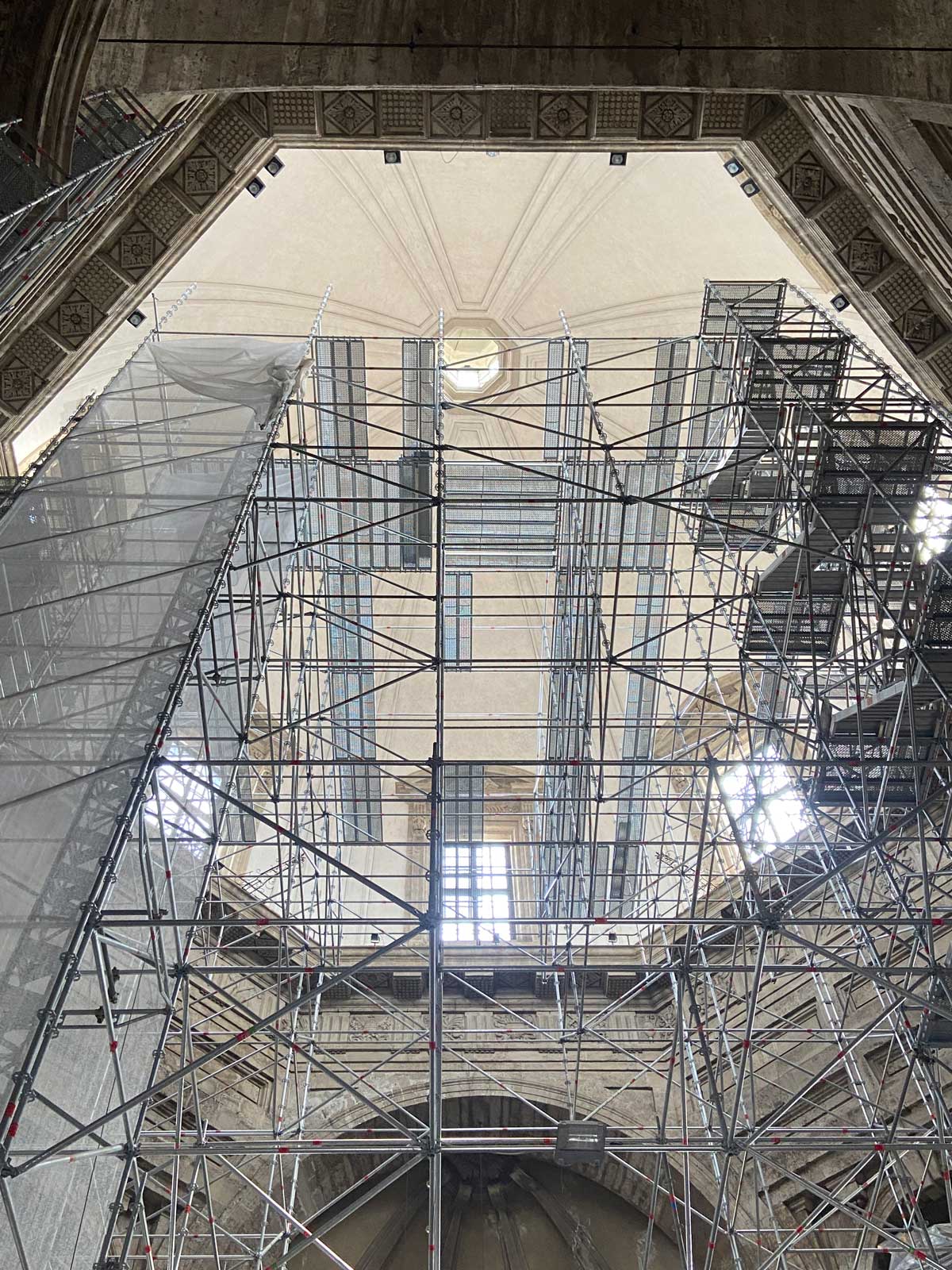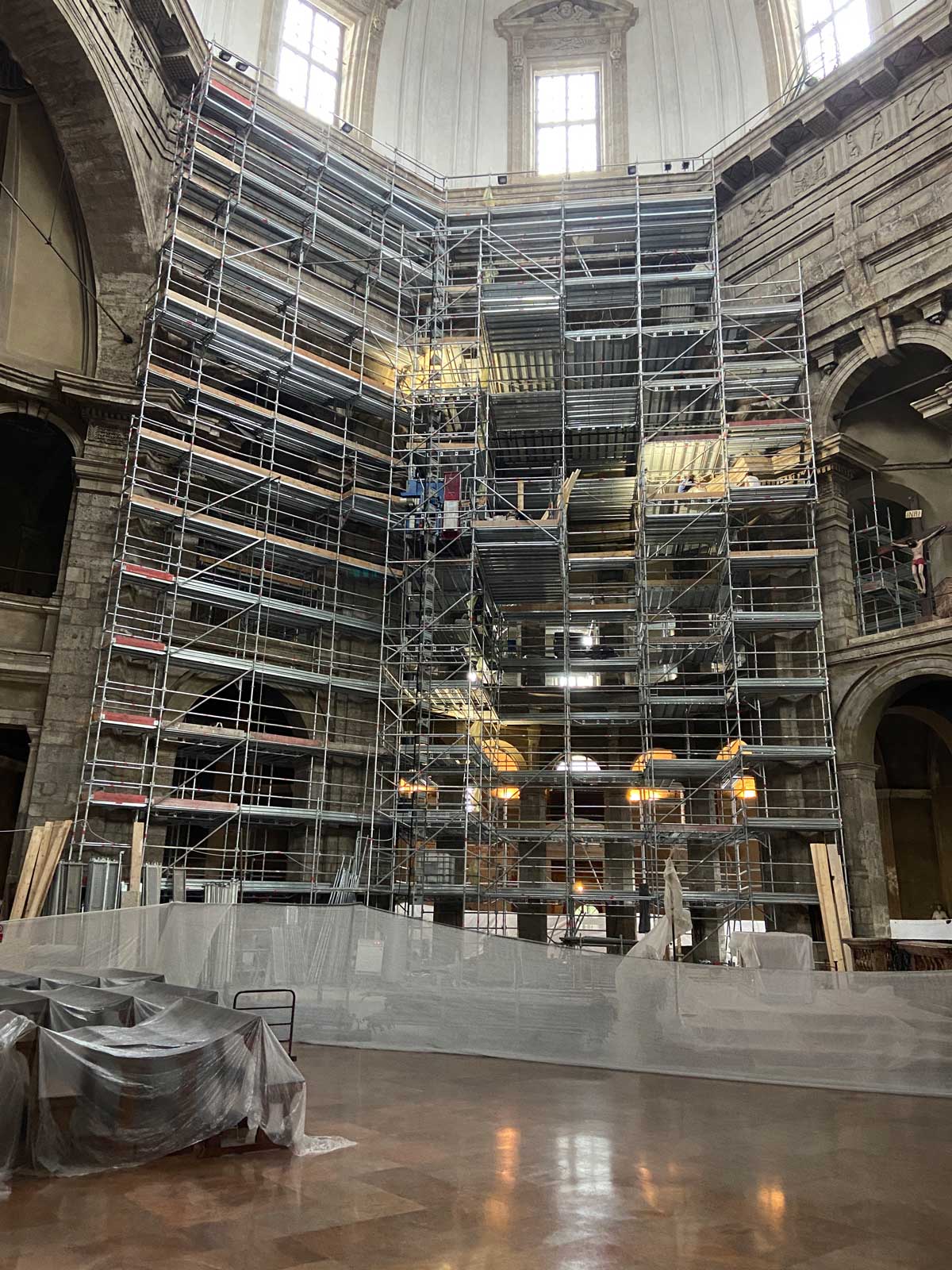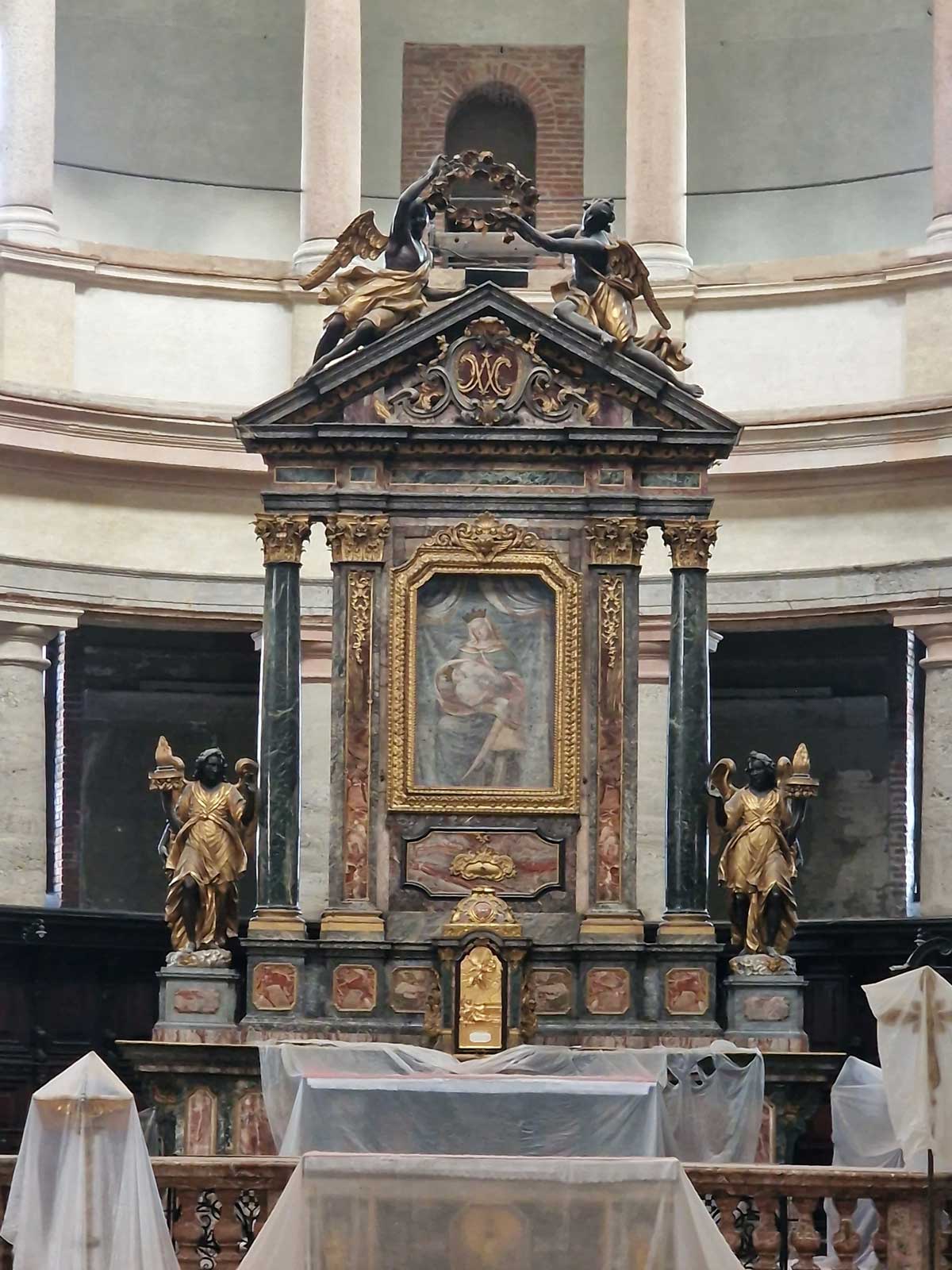


The origins and reasons behind the construction of the Basilica of San Lorenzo, described as the “most important and oldest centrally planned building in the Western Christian world”, have always been the subject of extensive studies, with its dating generally placed between the 4th and 5th centuries.
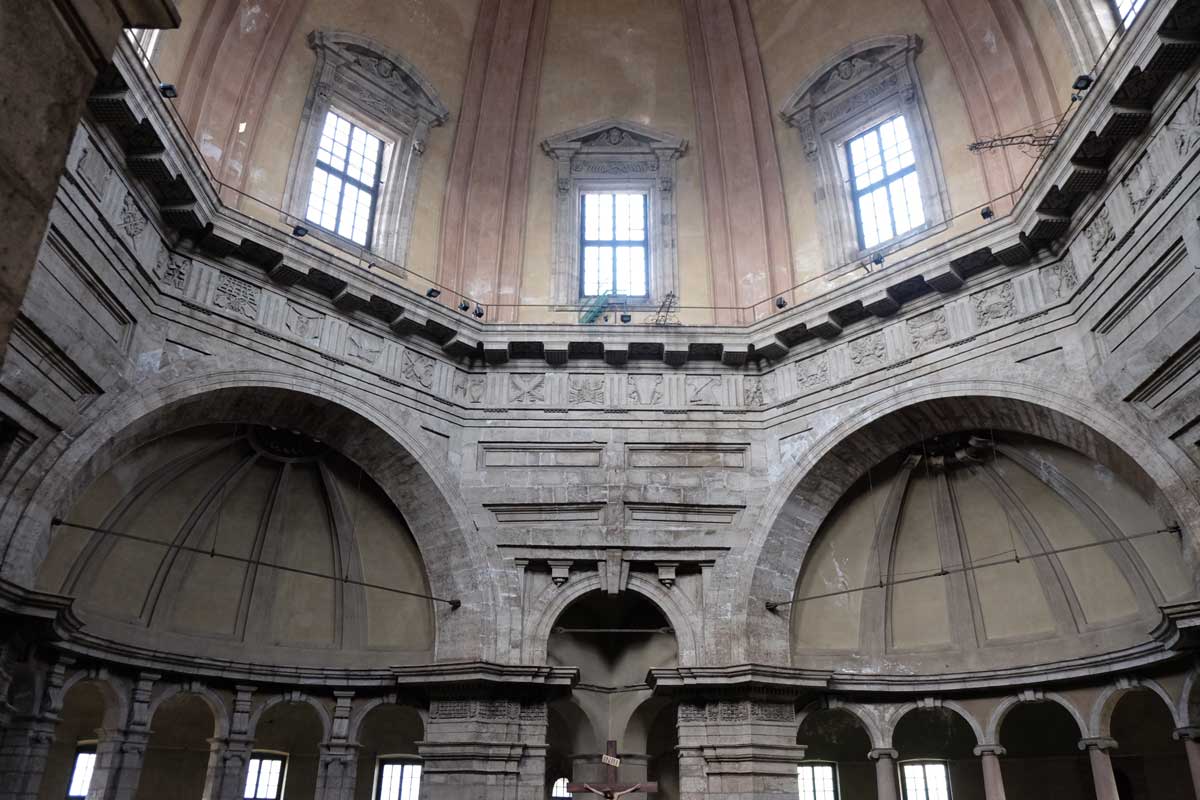
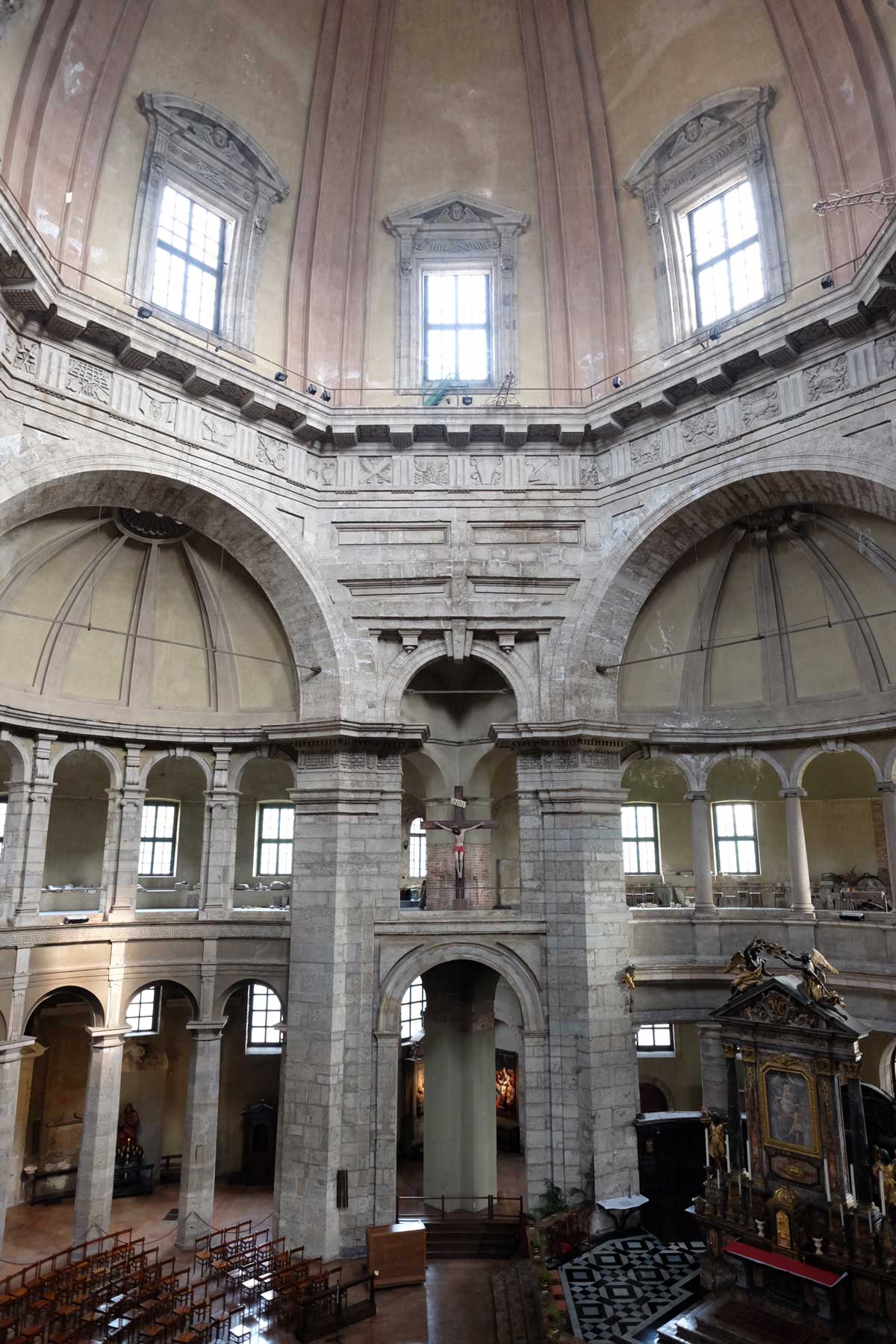
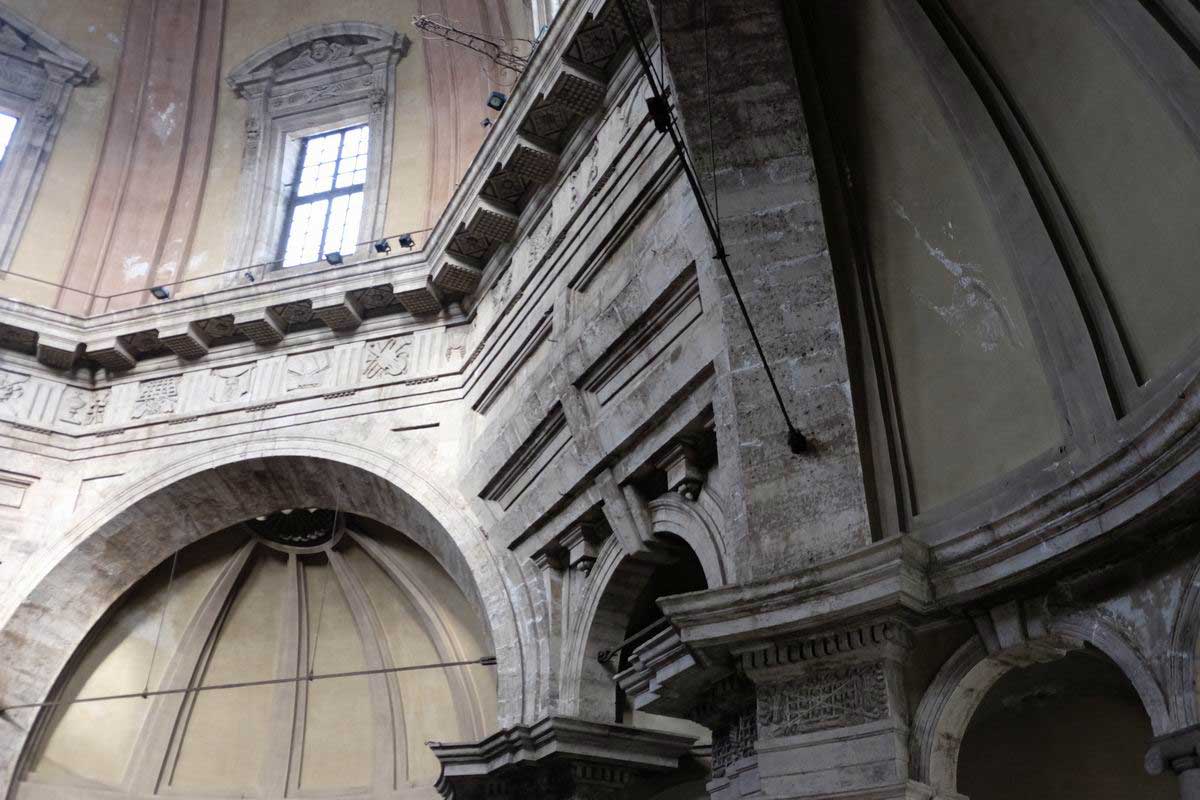
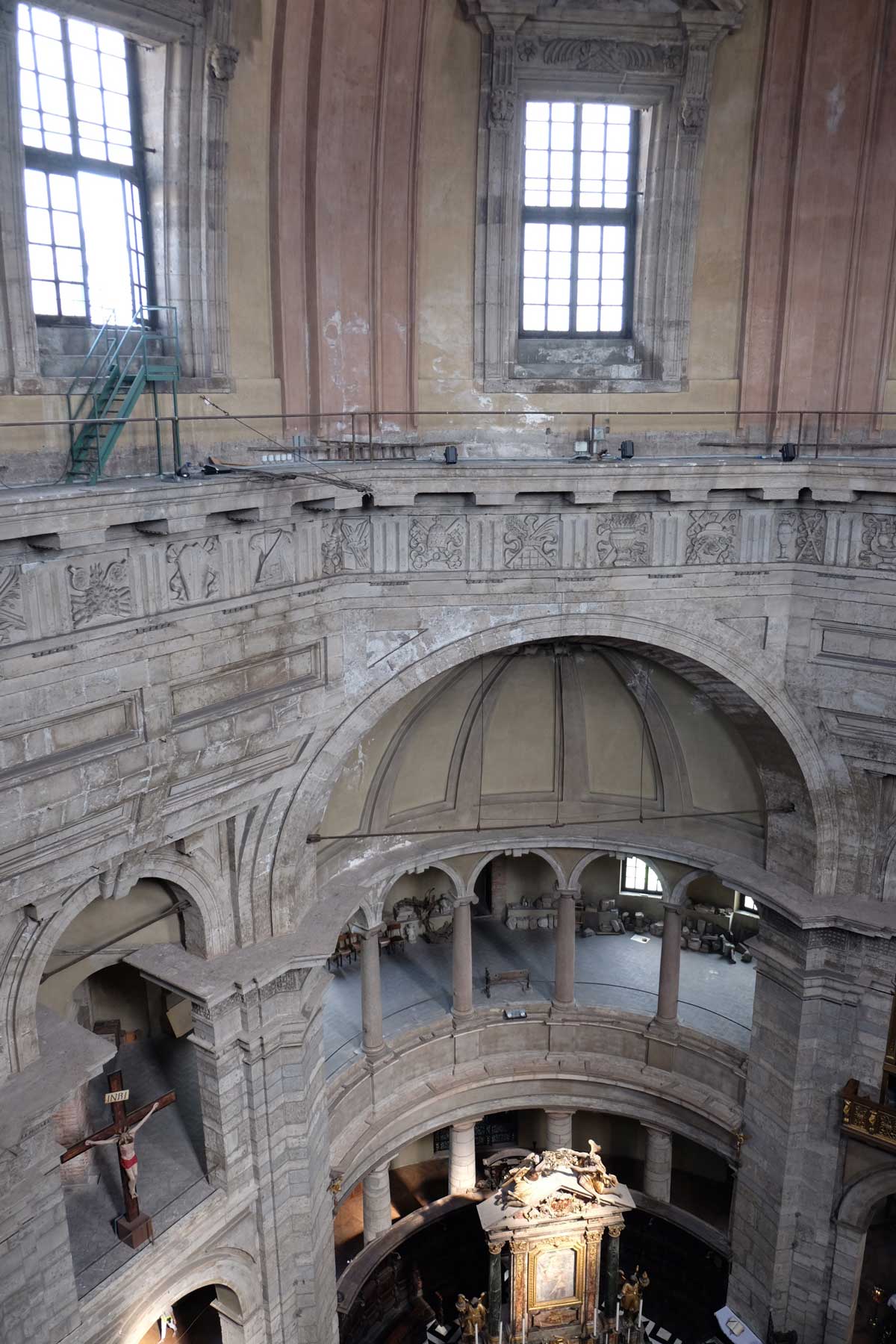
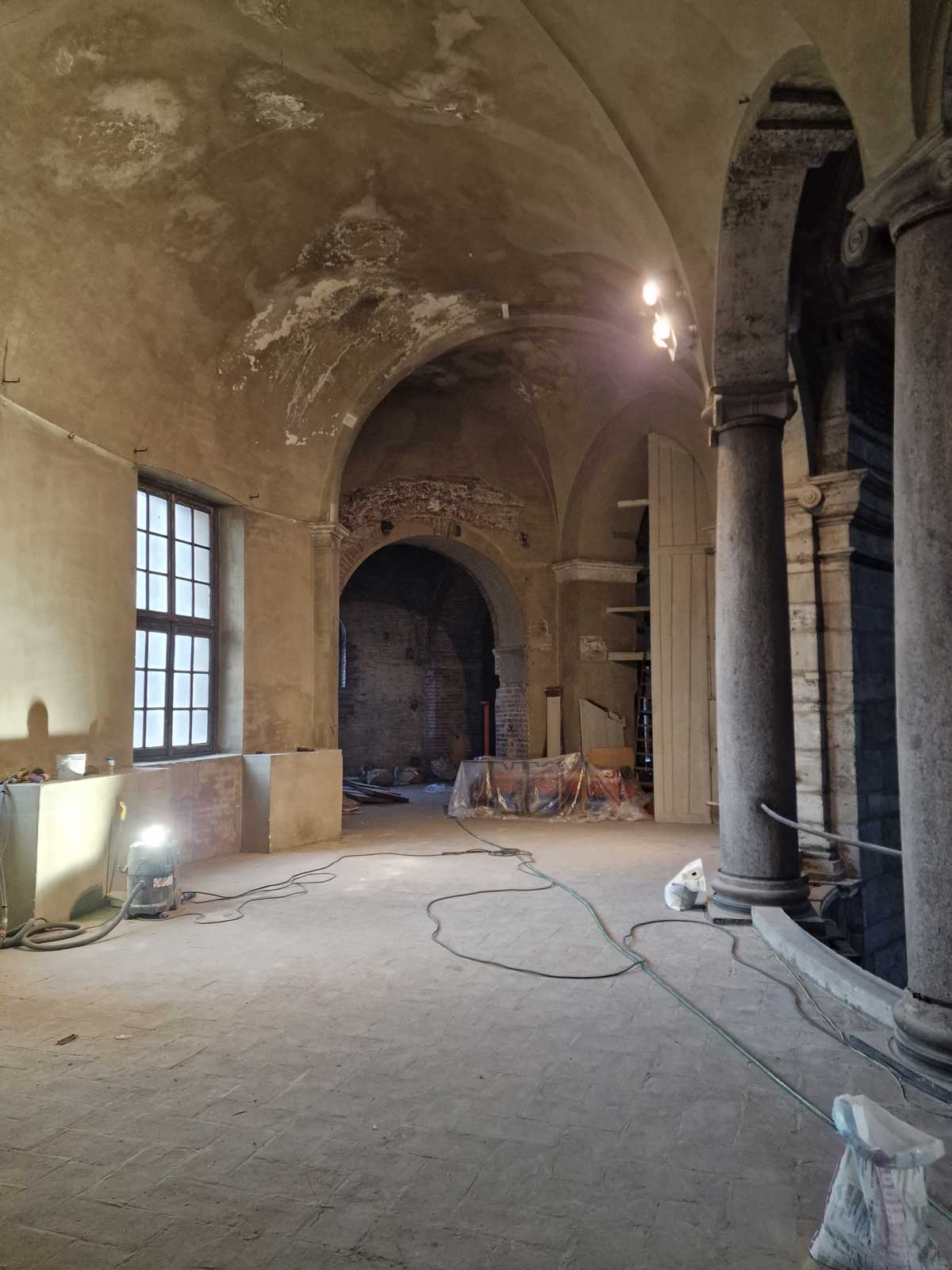
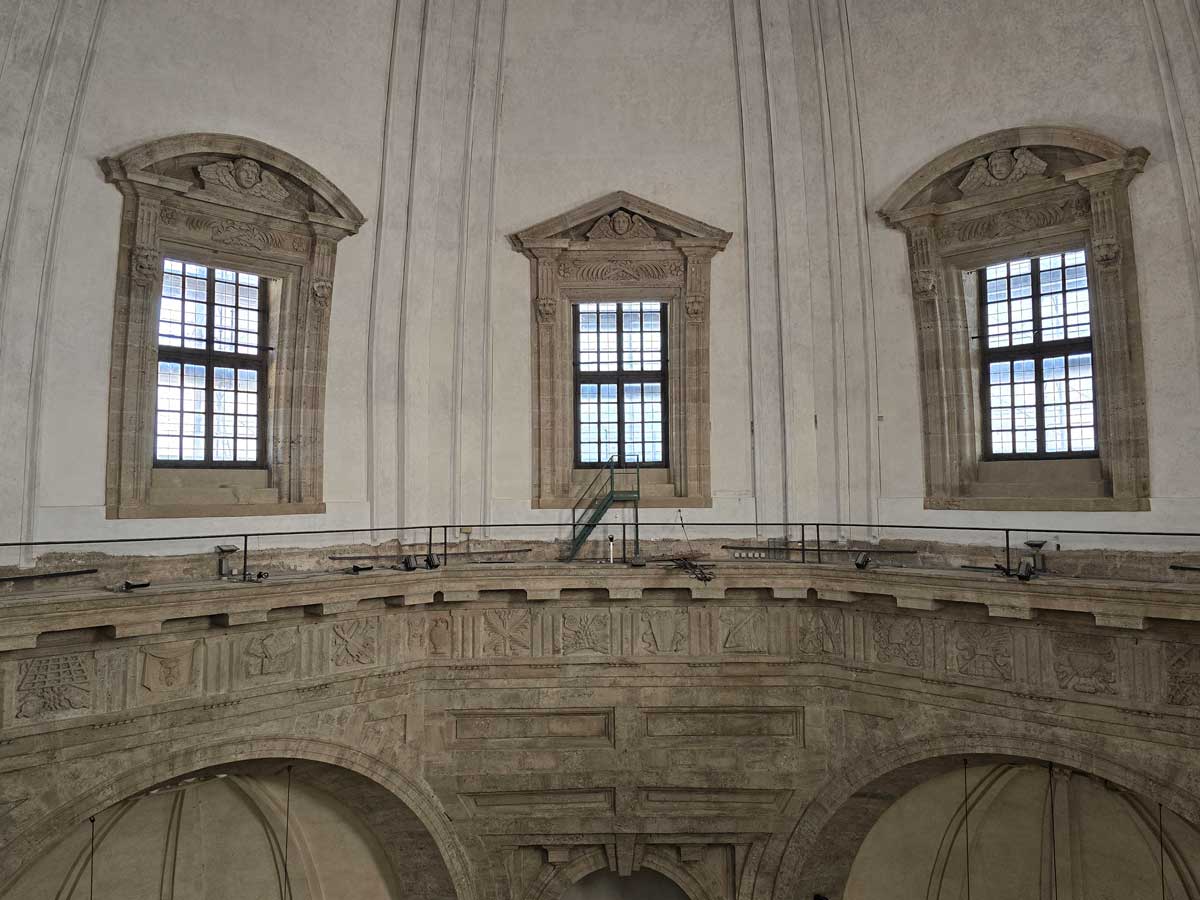
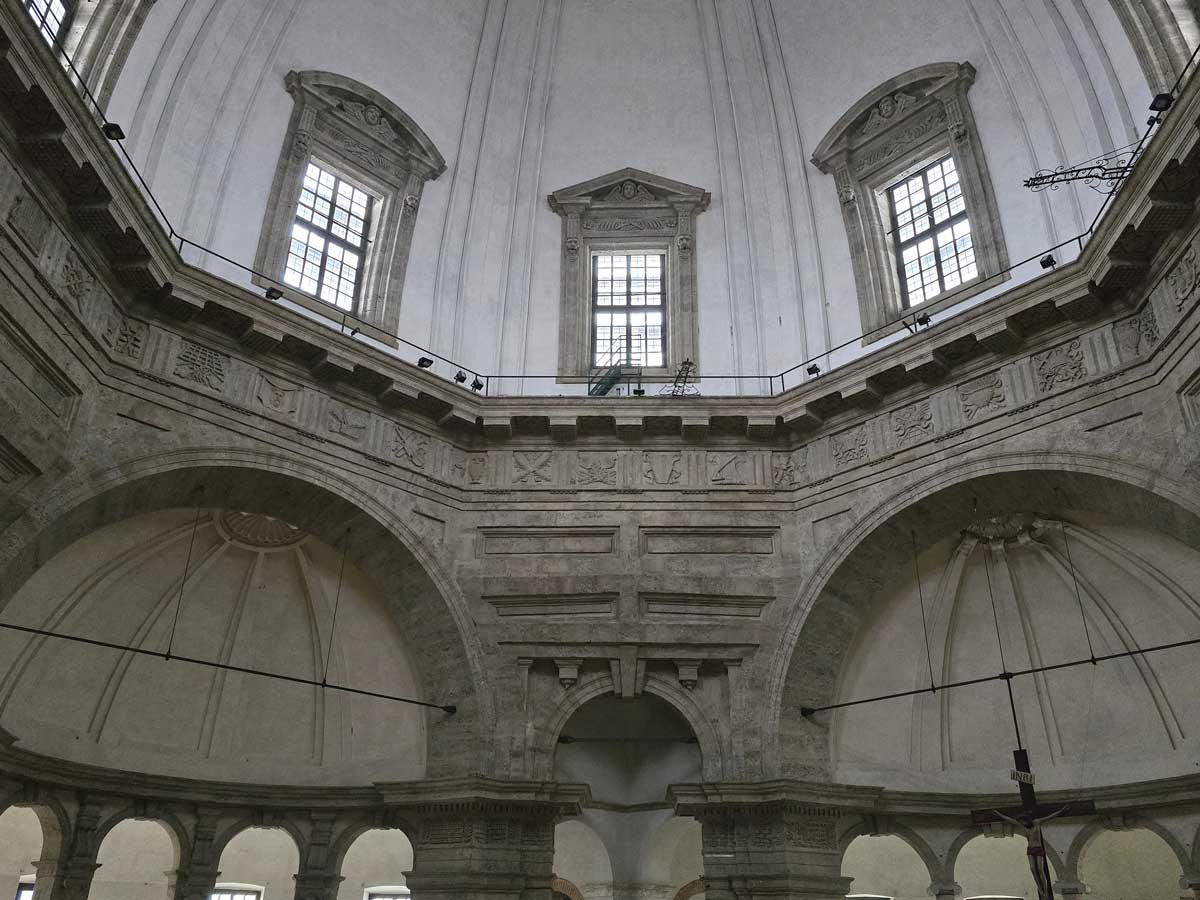
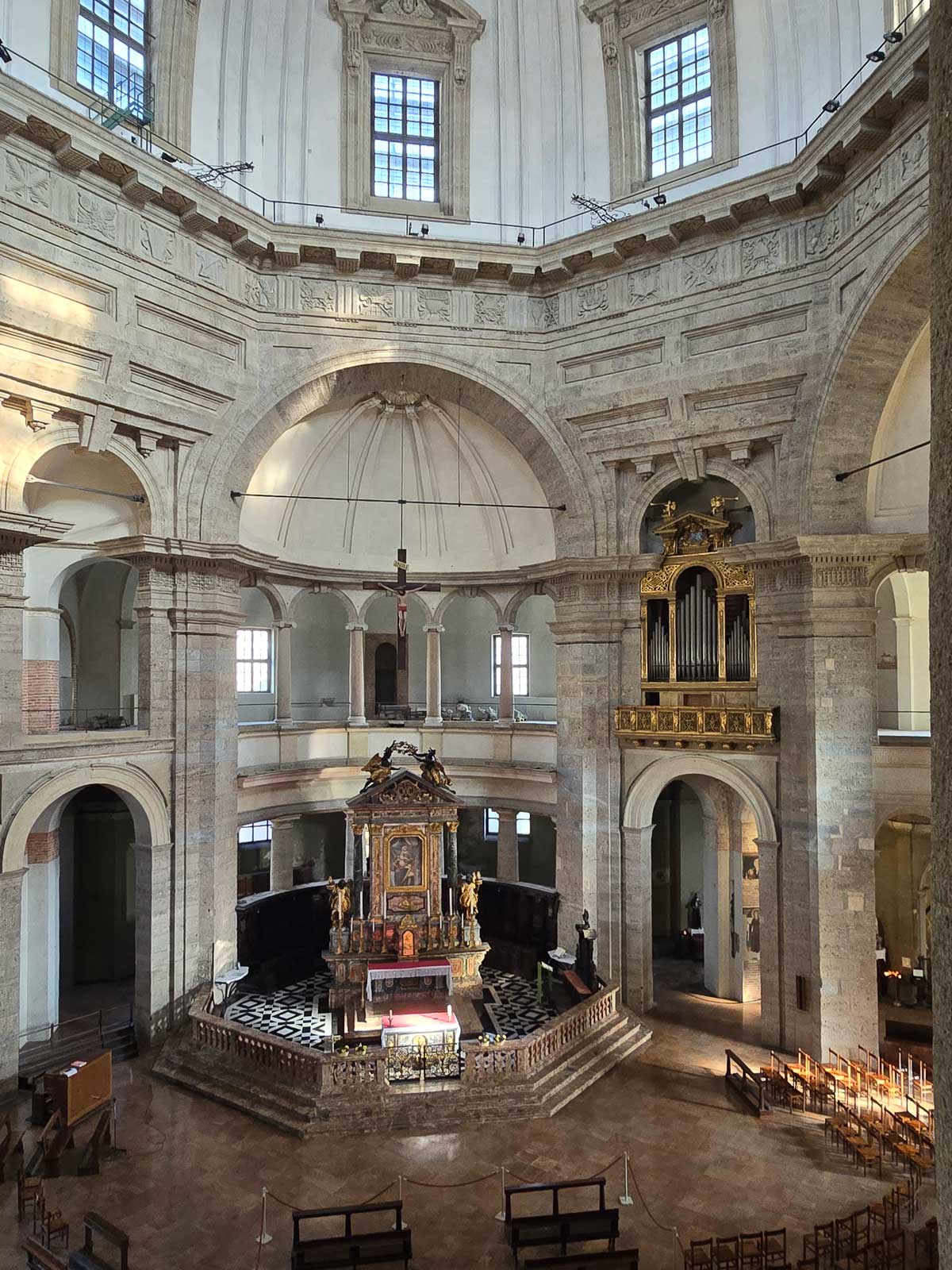
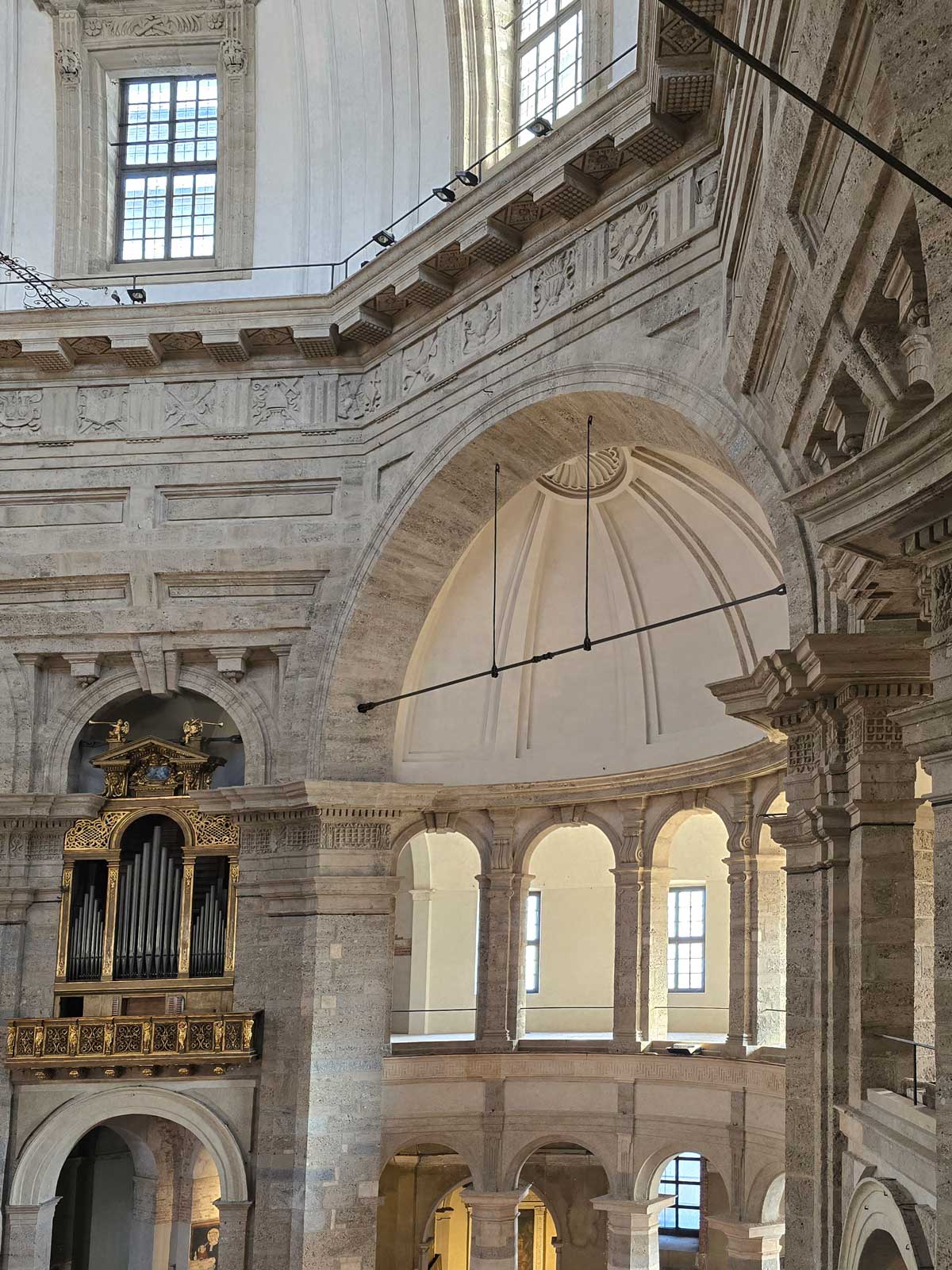
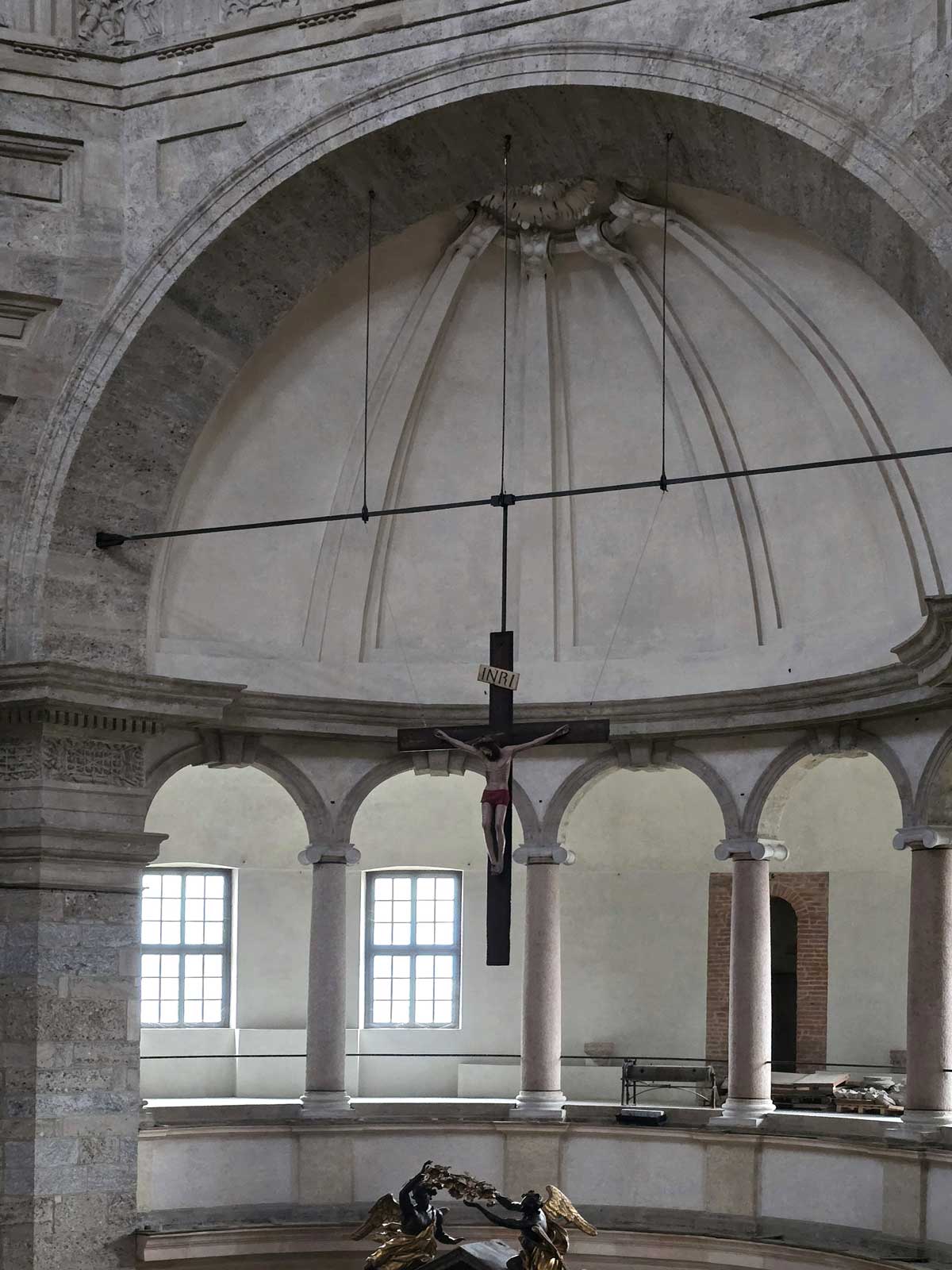
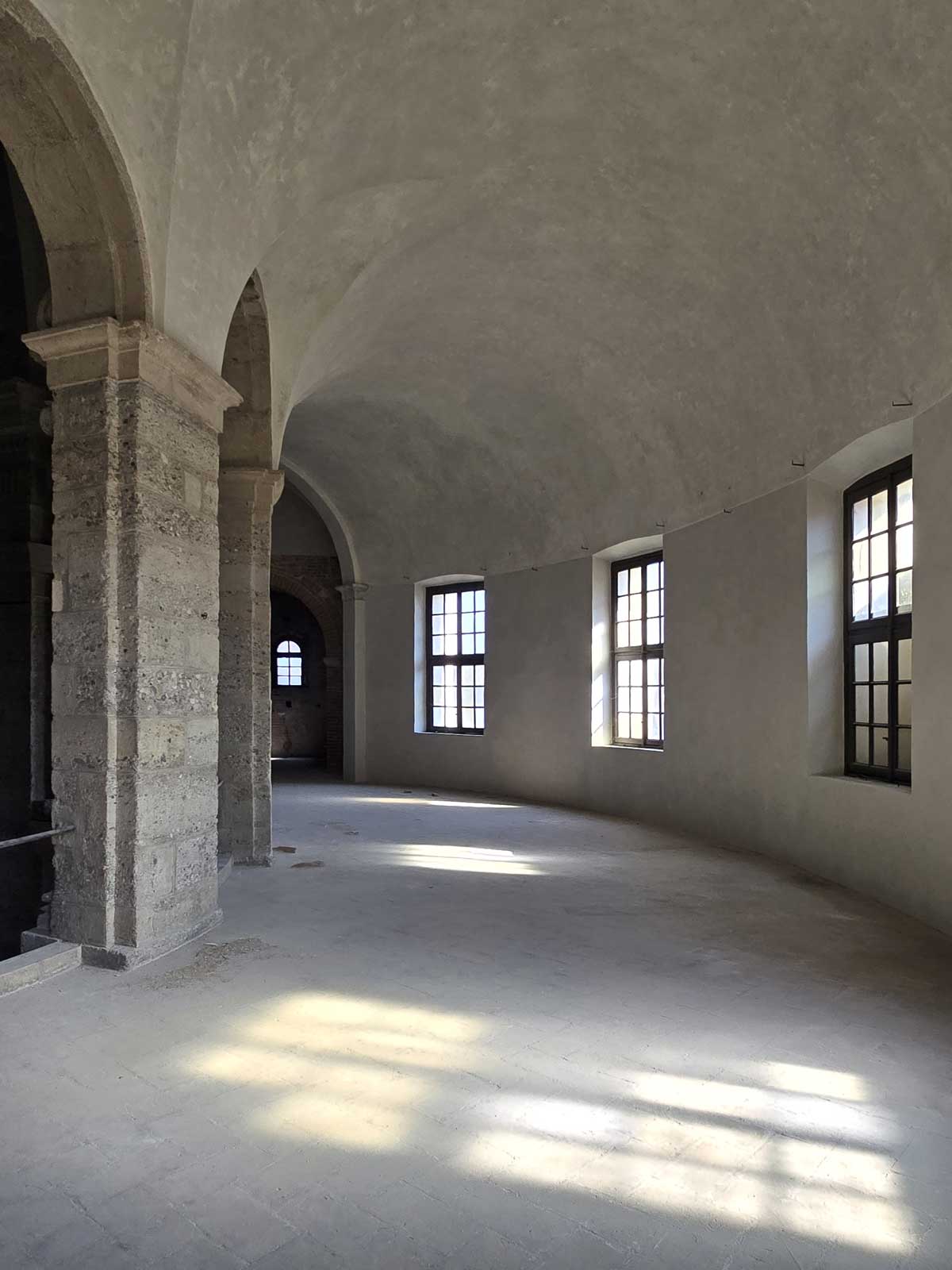
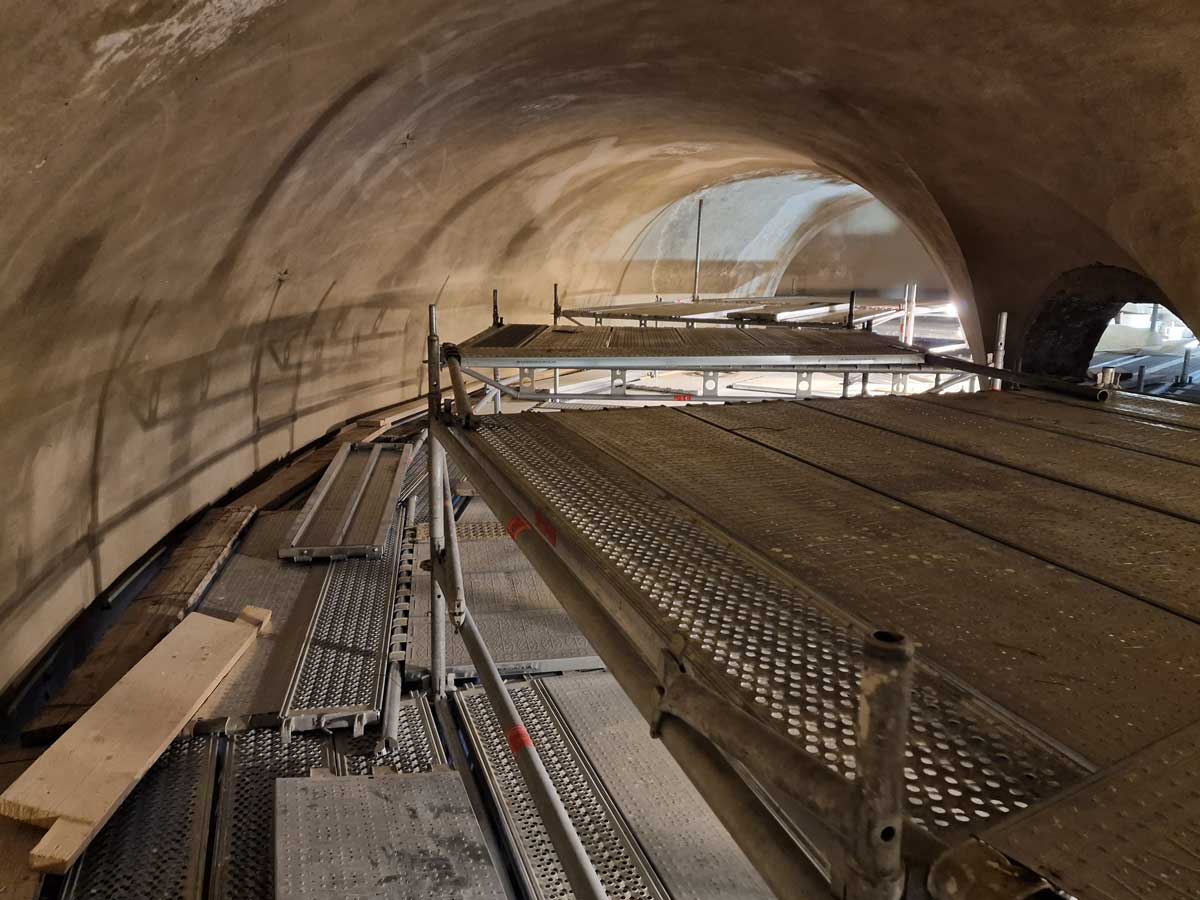
The central structure, characterised by a highly monumental design, features a central plan with four exedras connected by arches, a dome and four perimeter towers, as well as colonnades and lateral chapels (Sant’Aquilino, Sant’Ippolito and San Sisto).
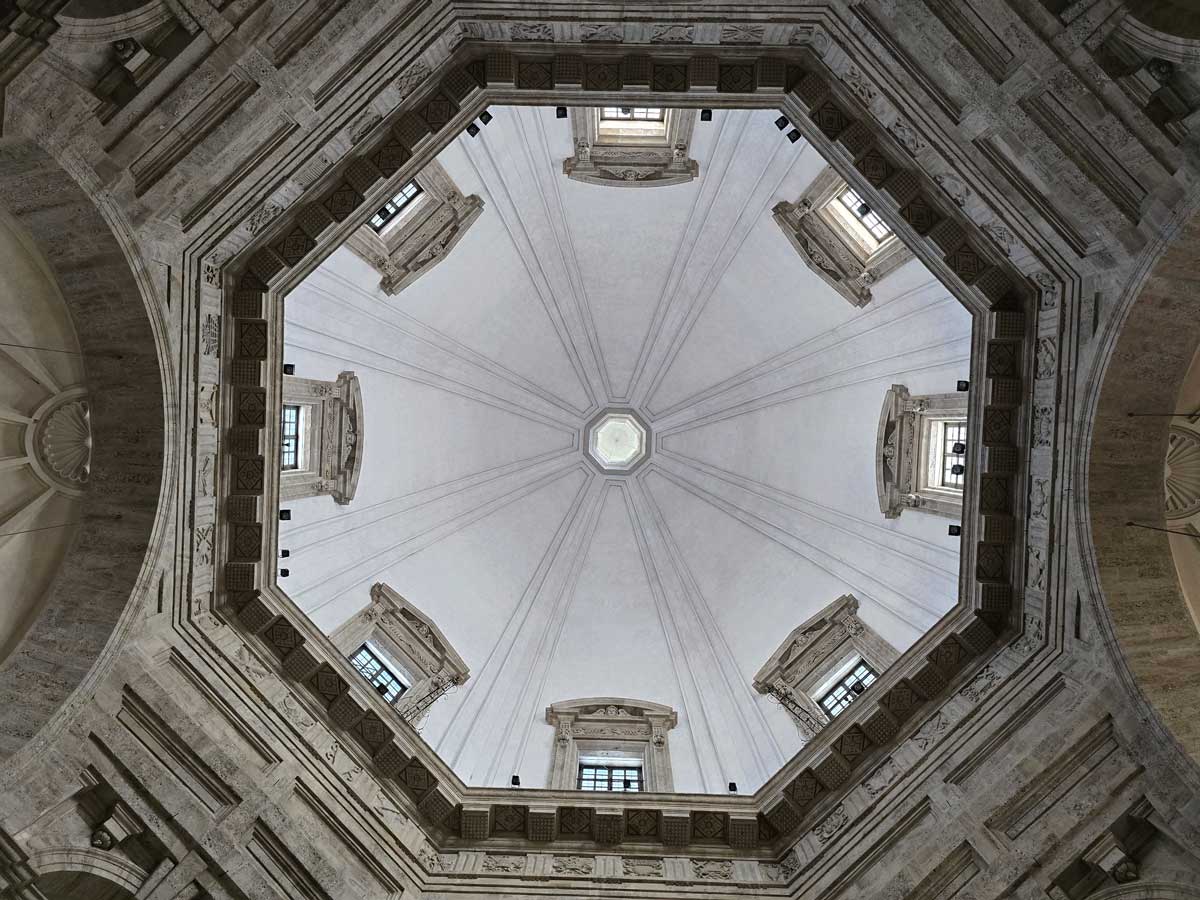
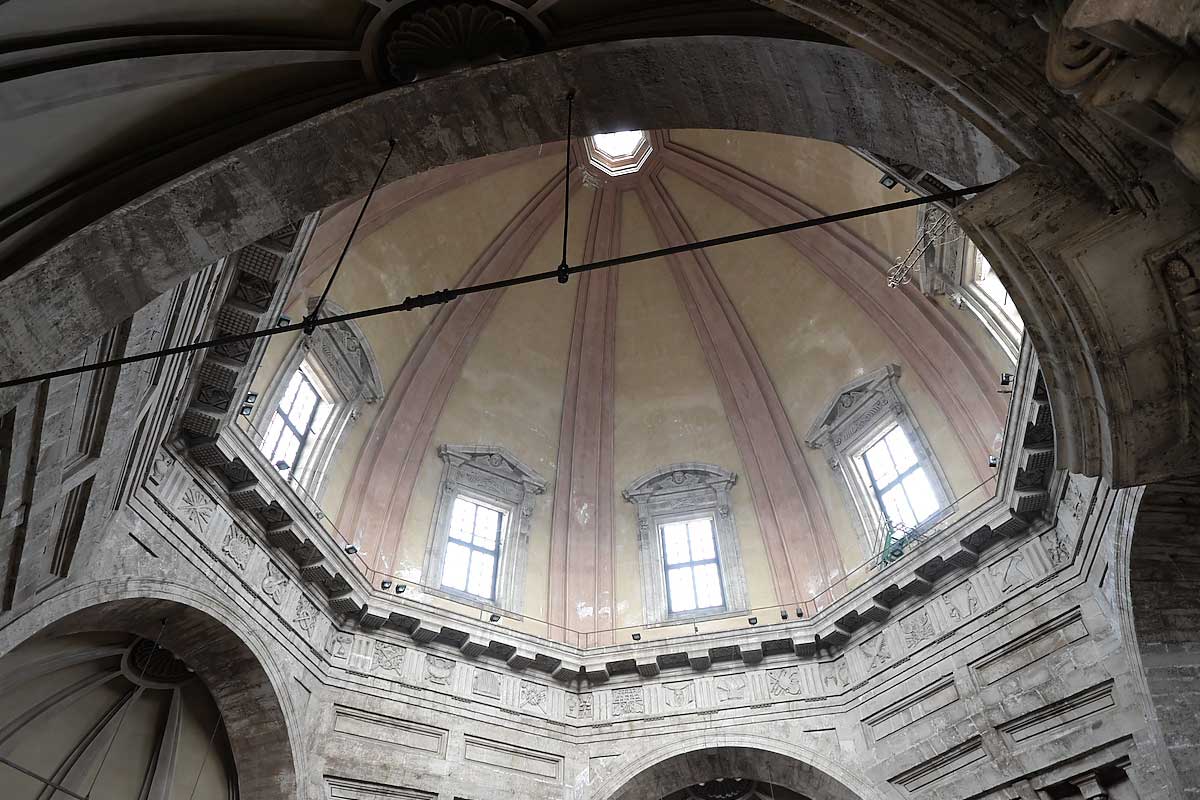
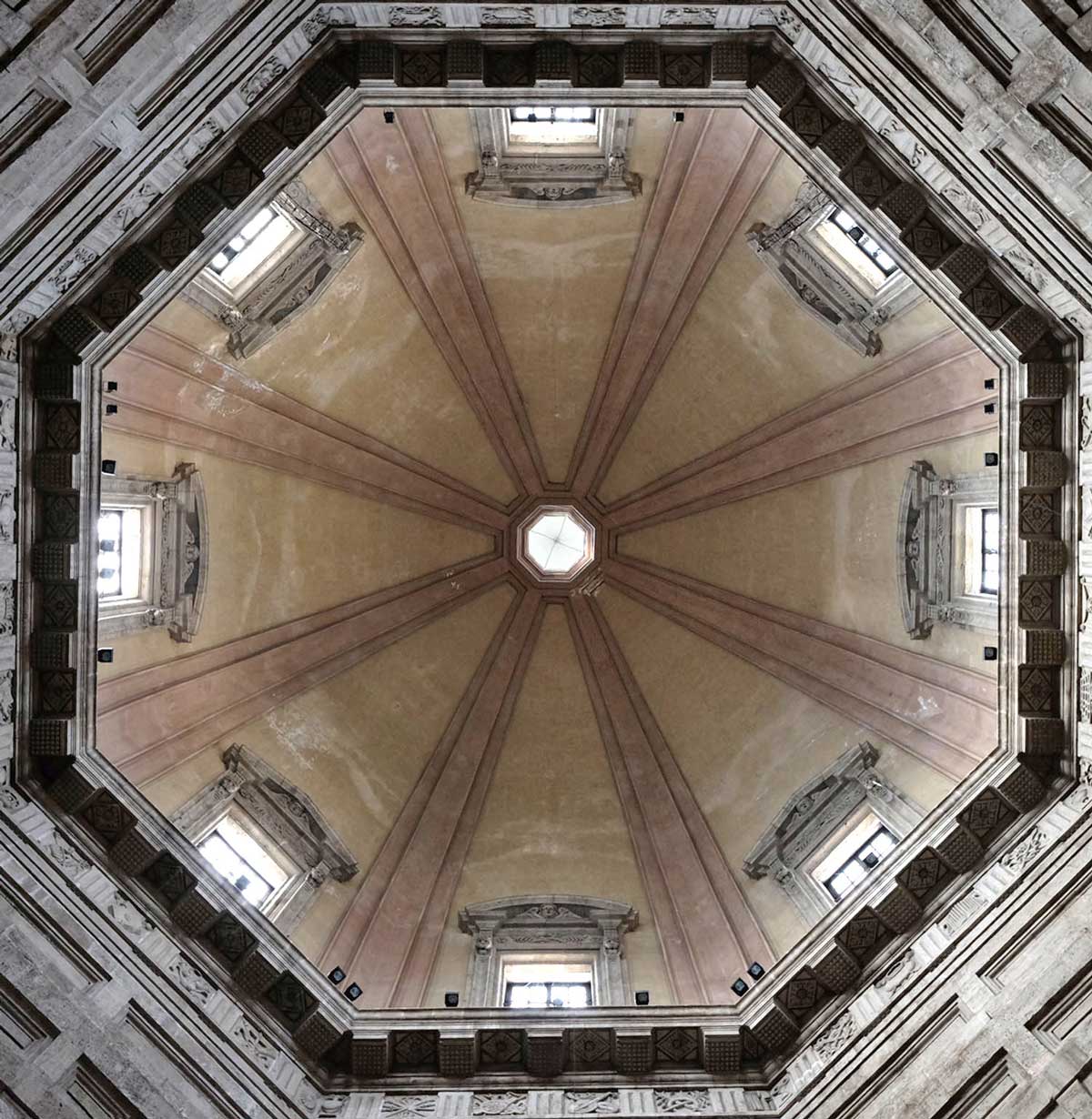
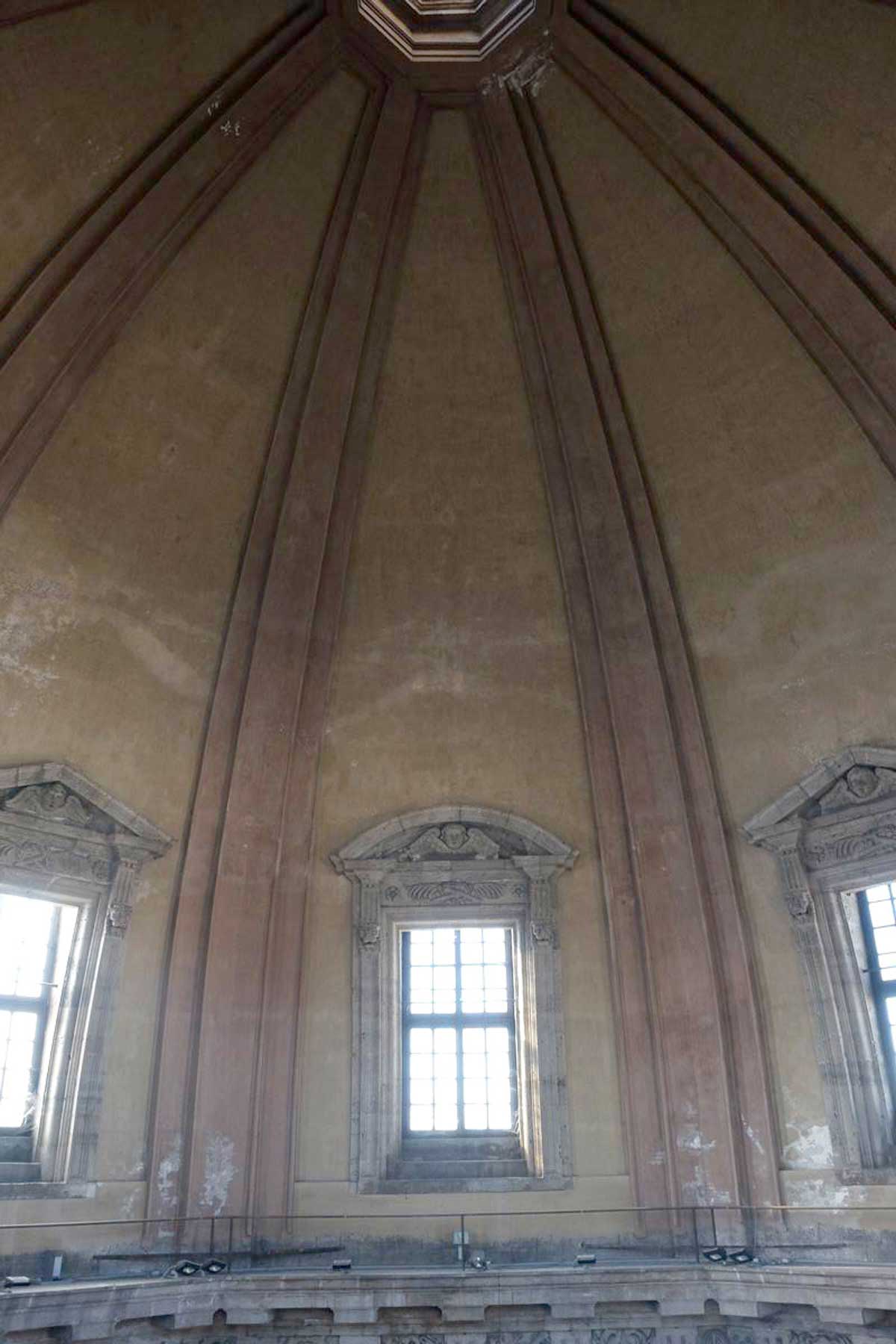
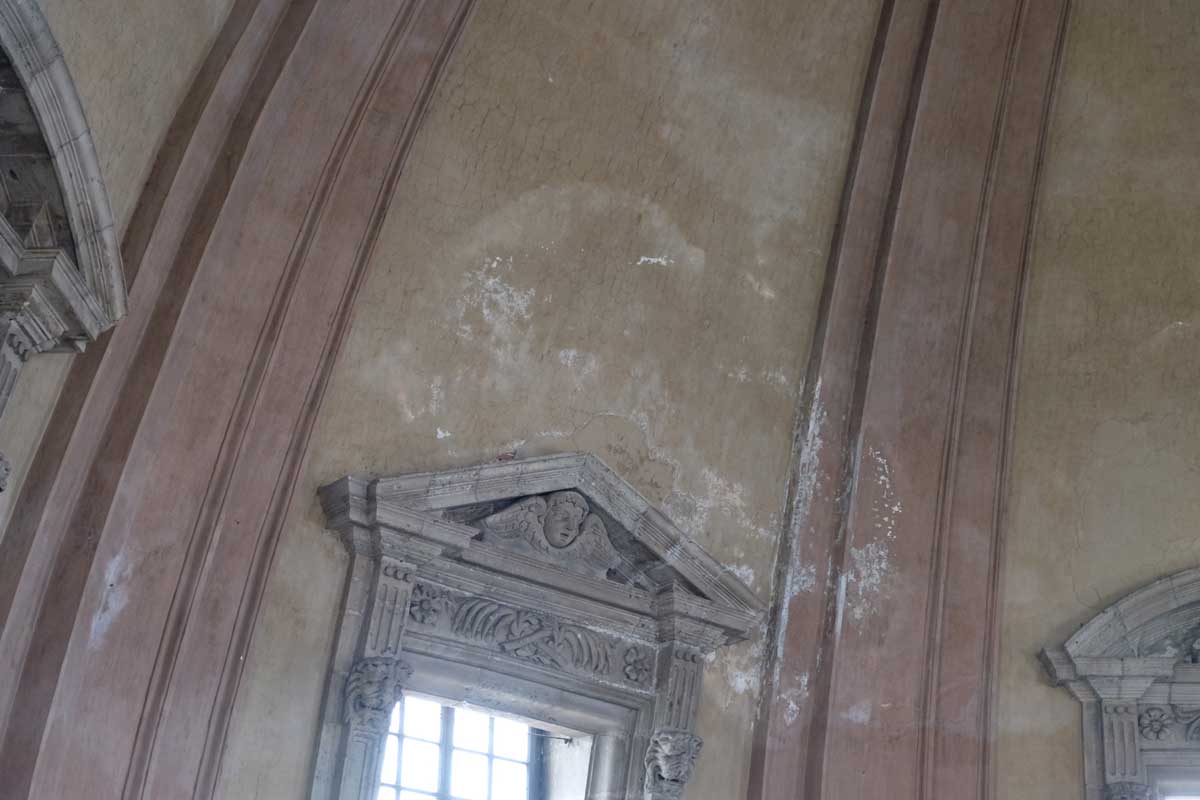
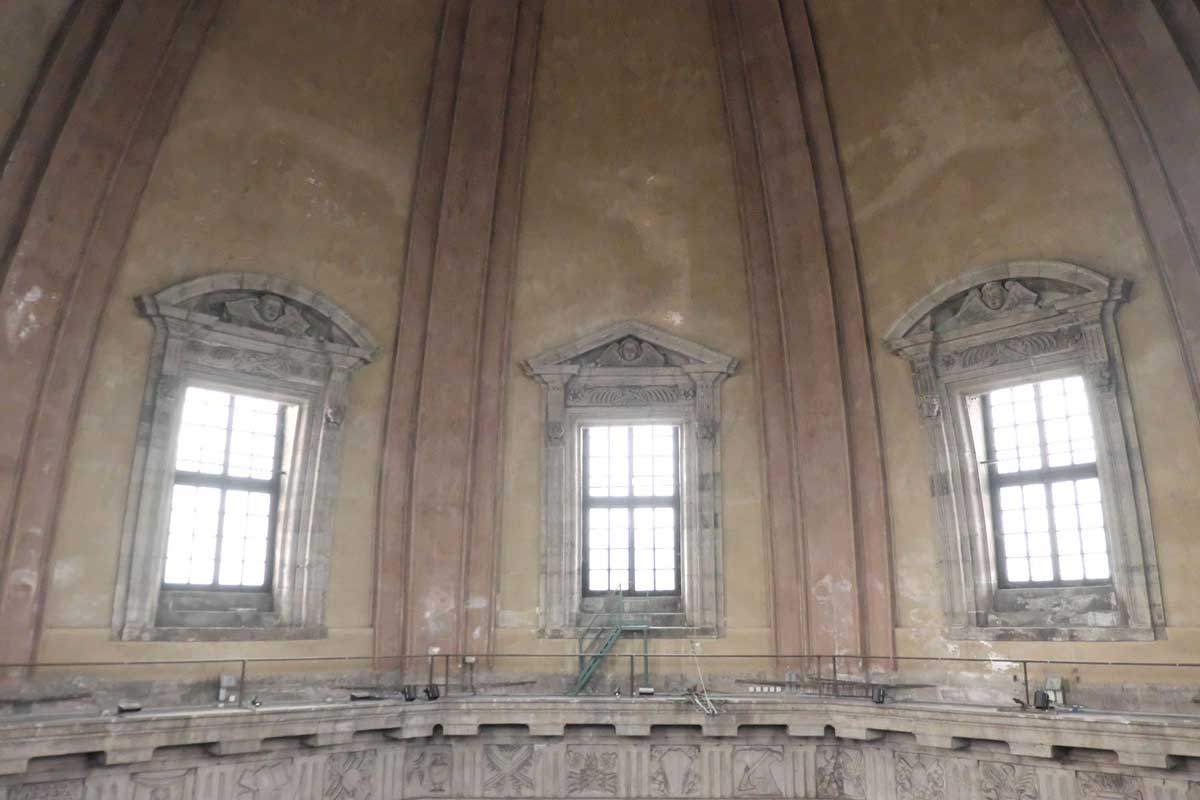
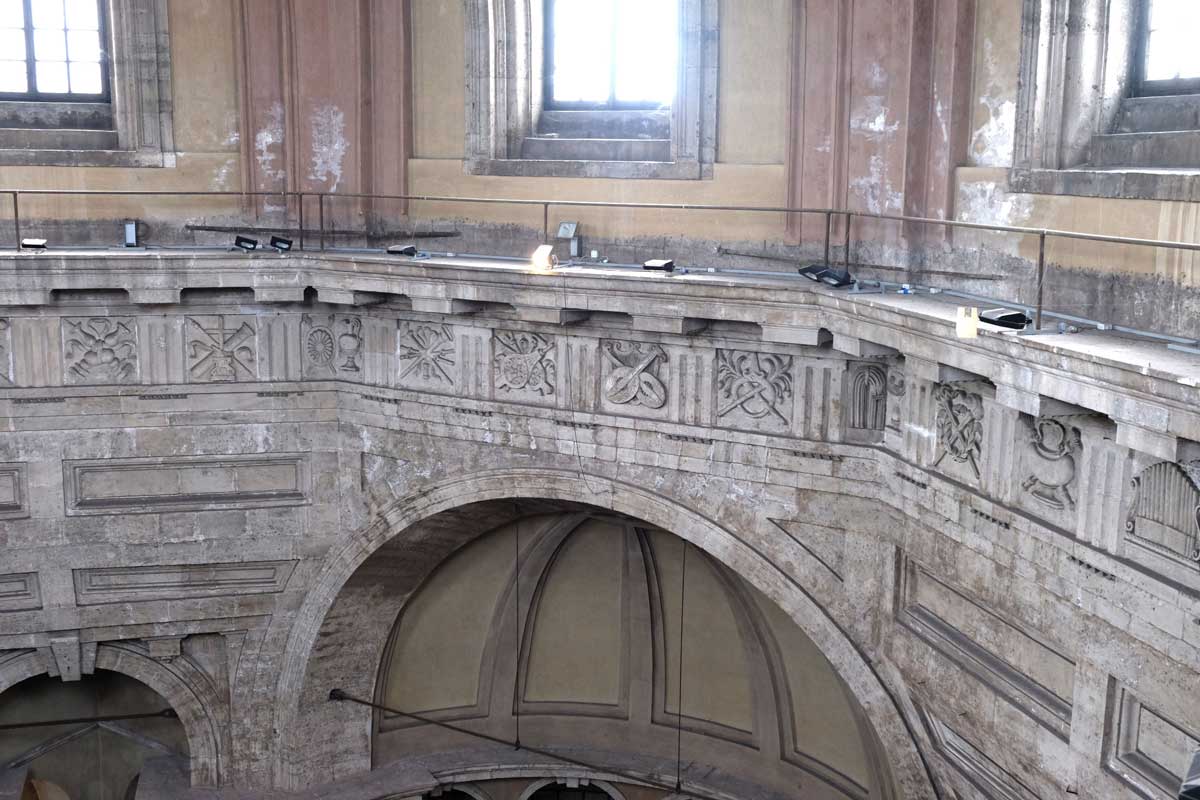
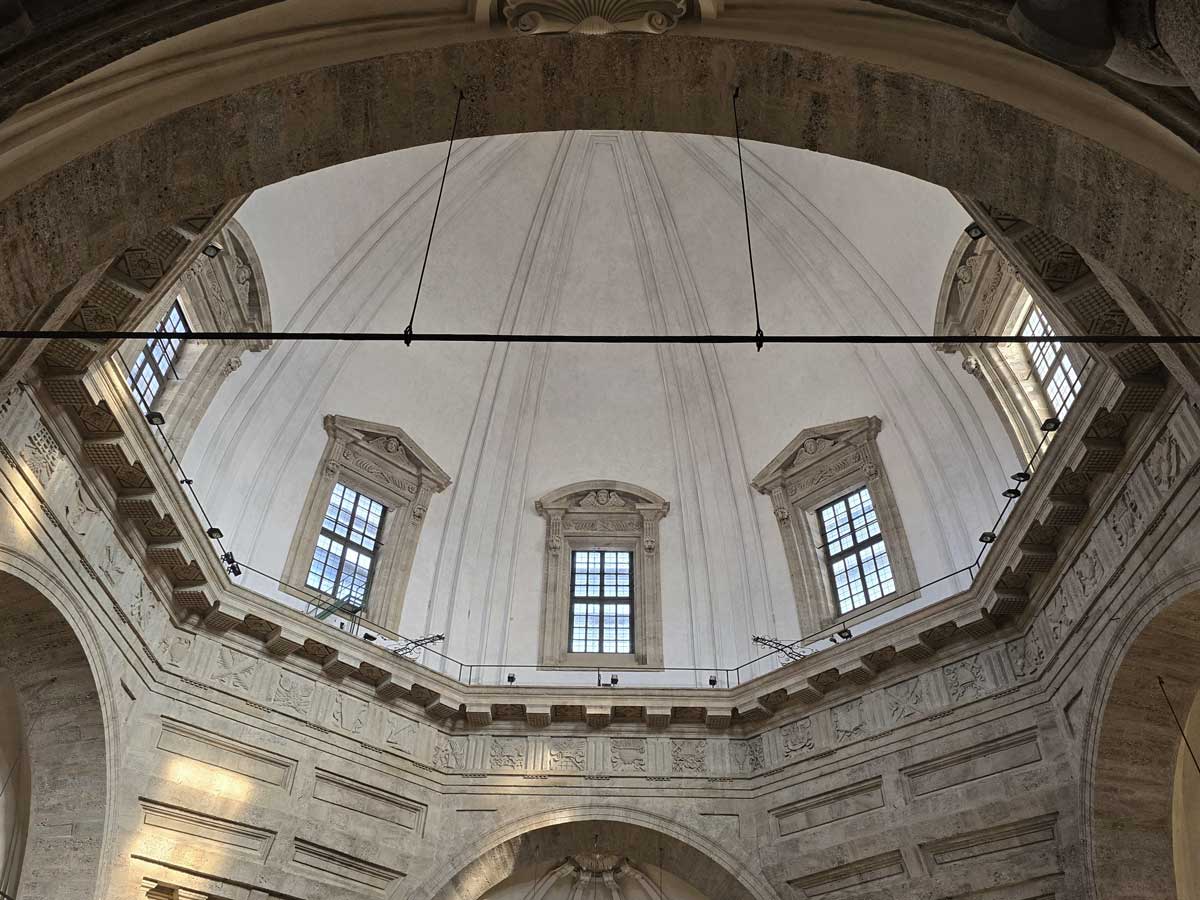
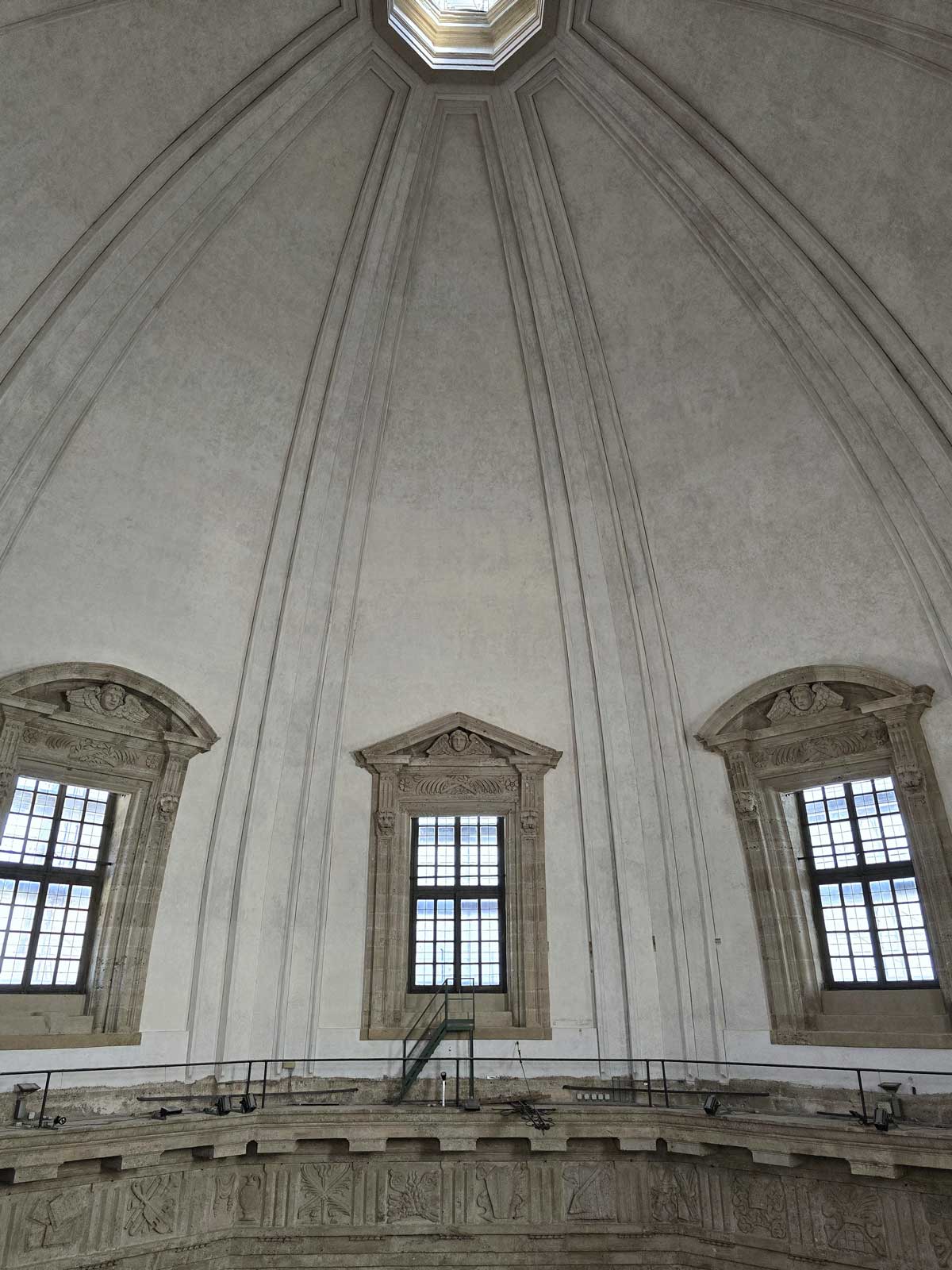
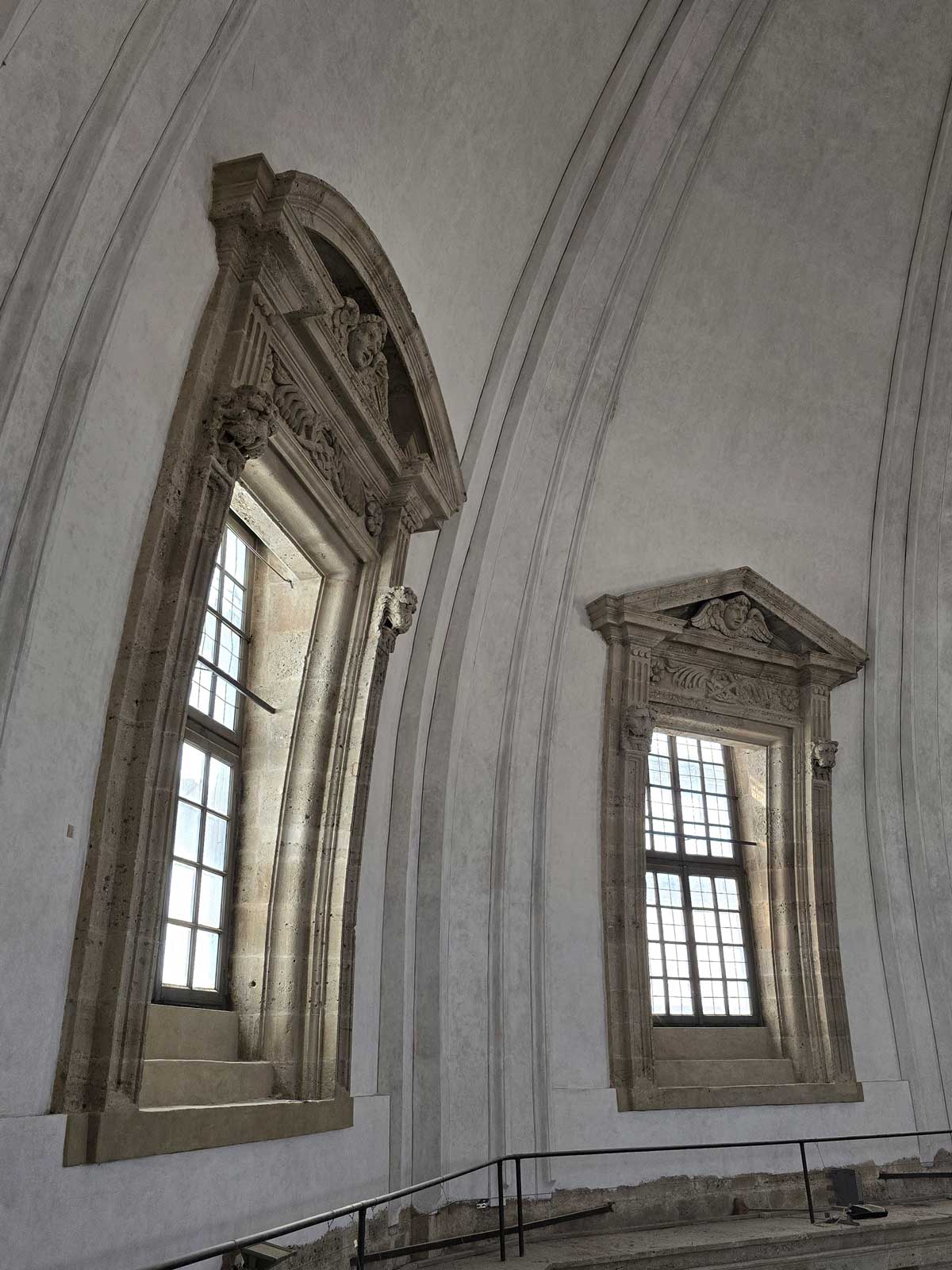
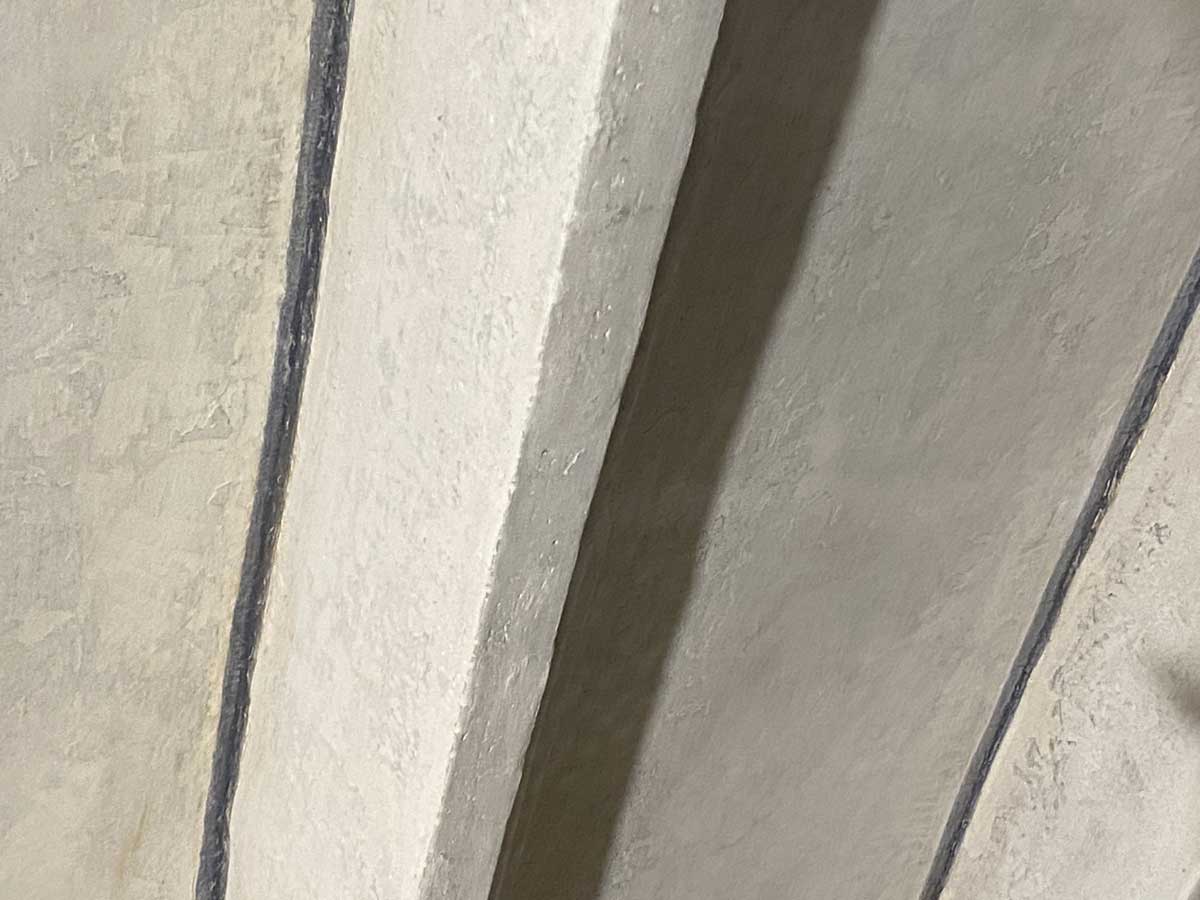
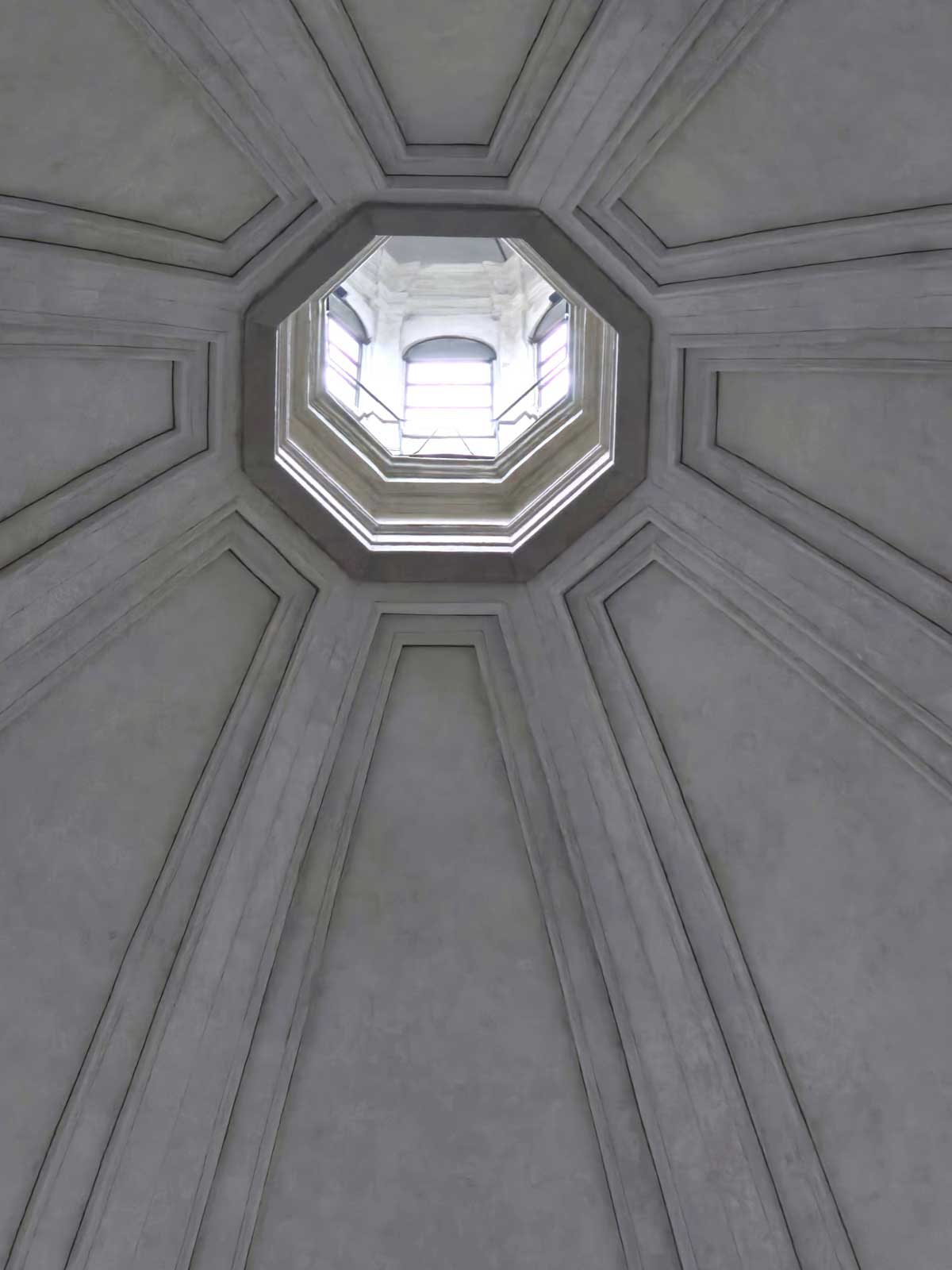
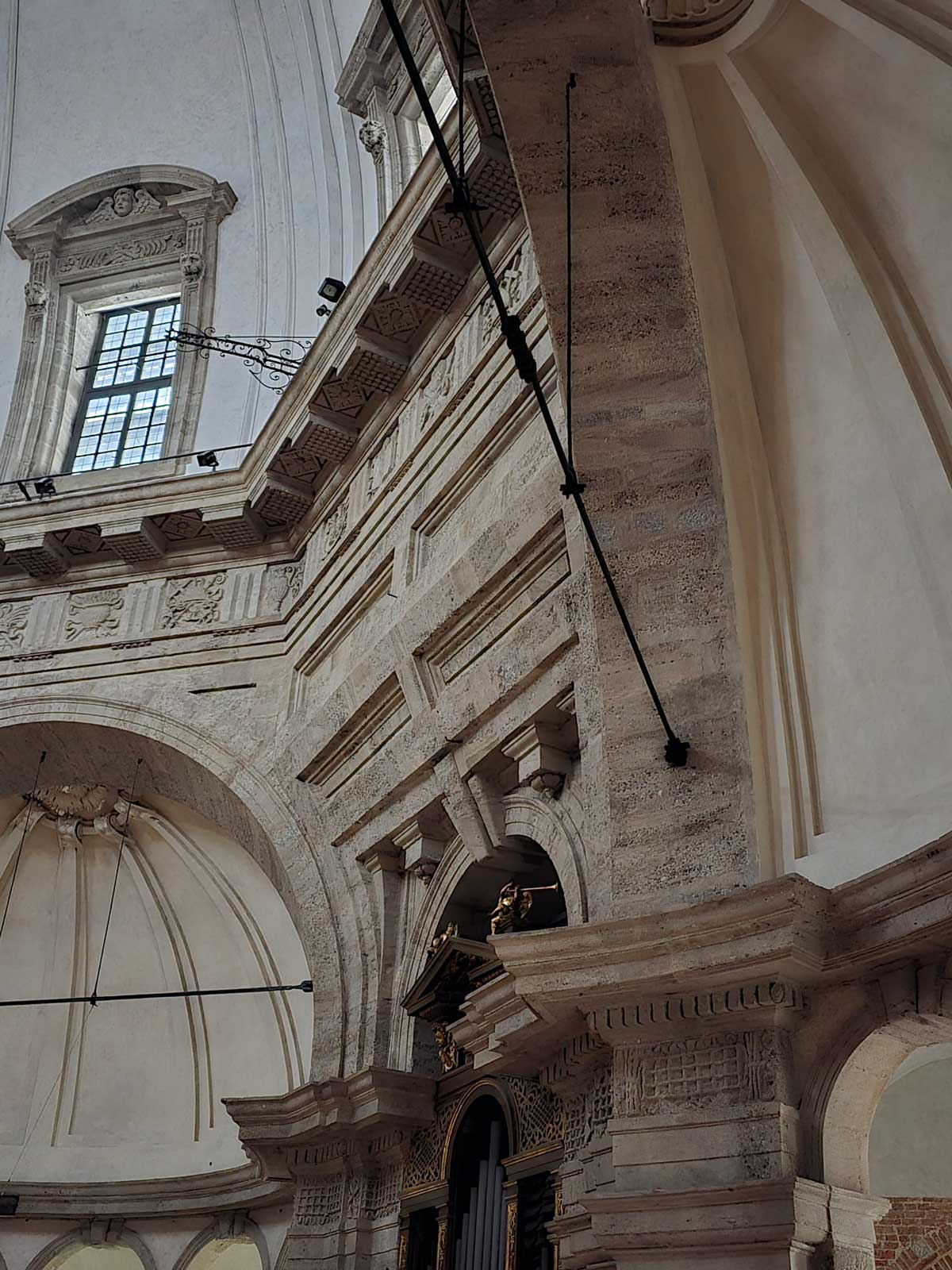
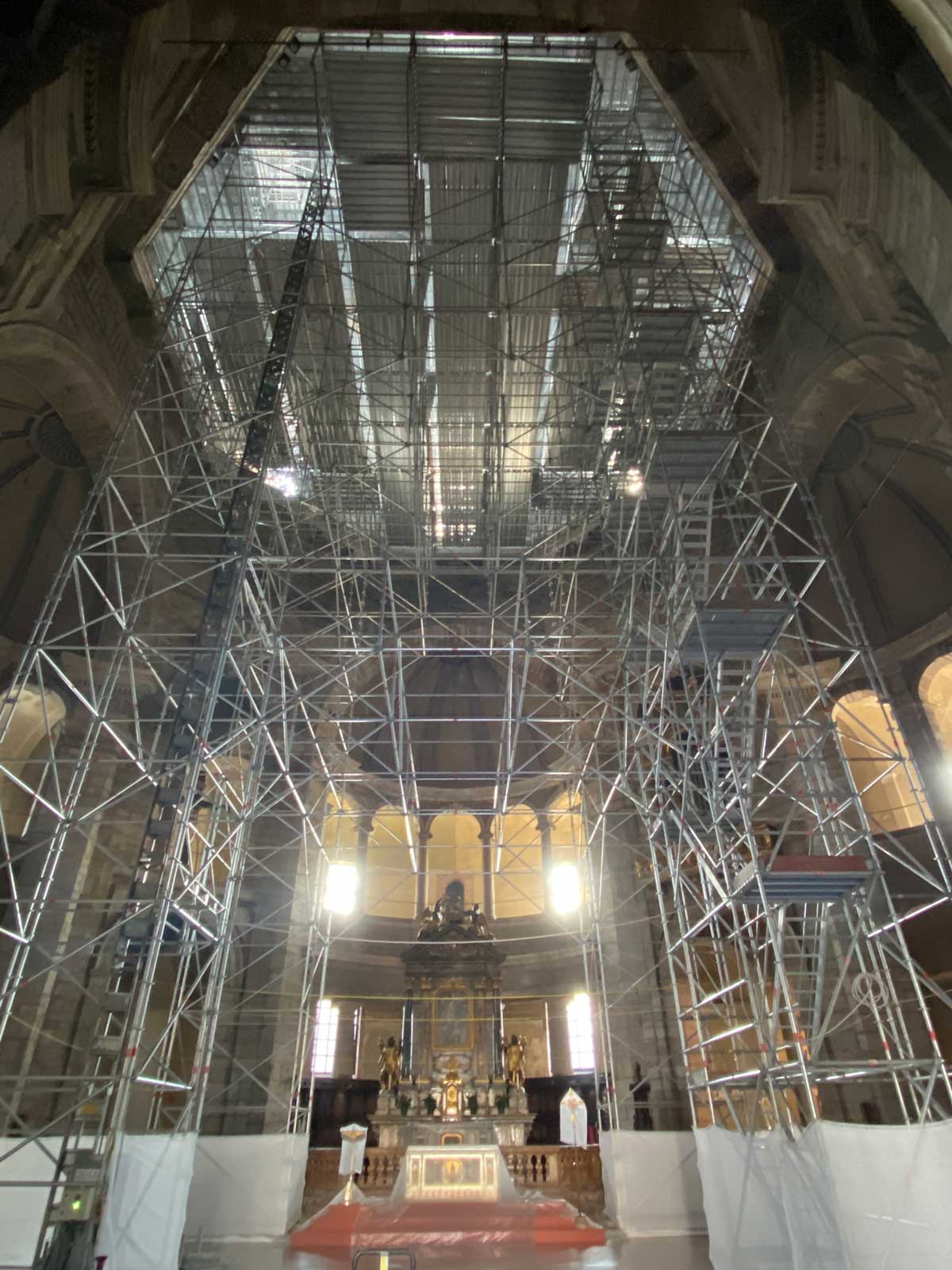
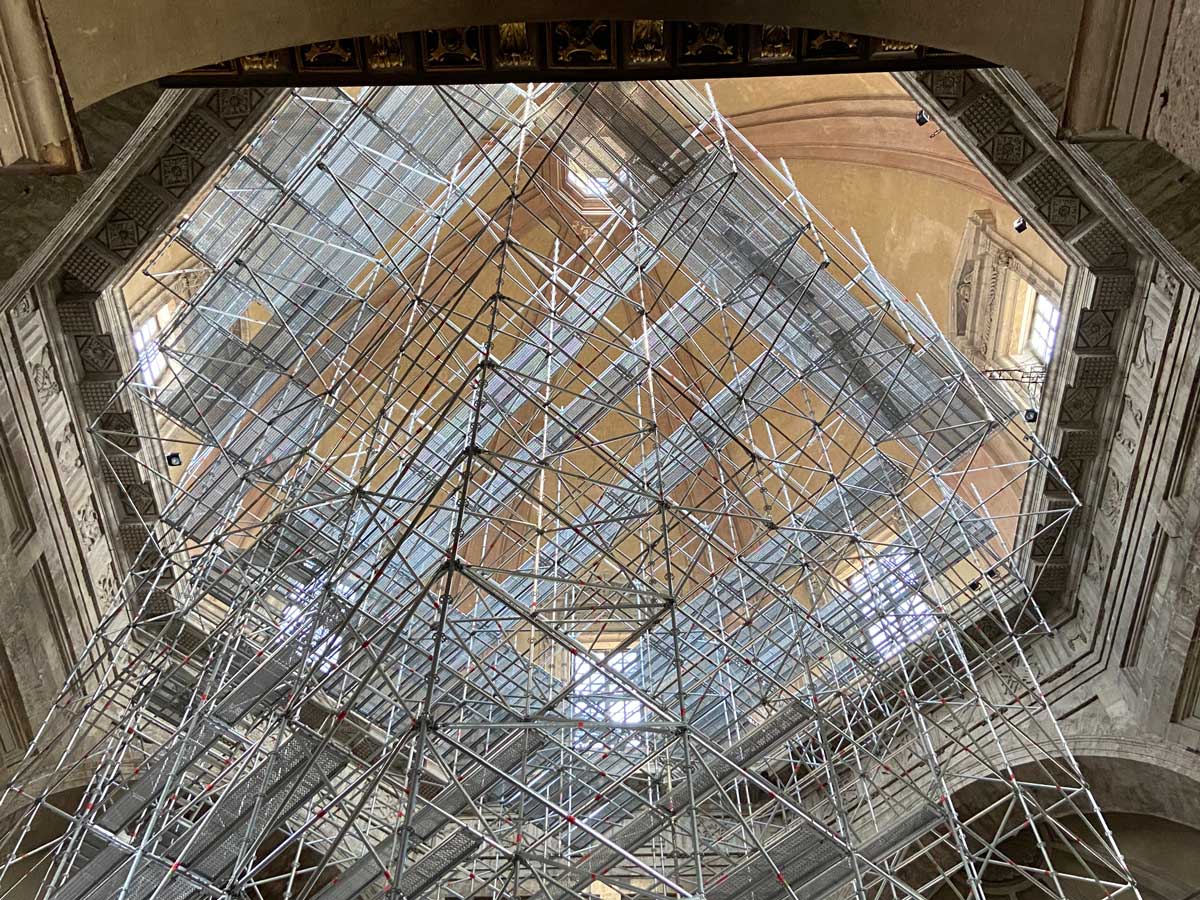
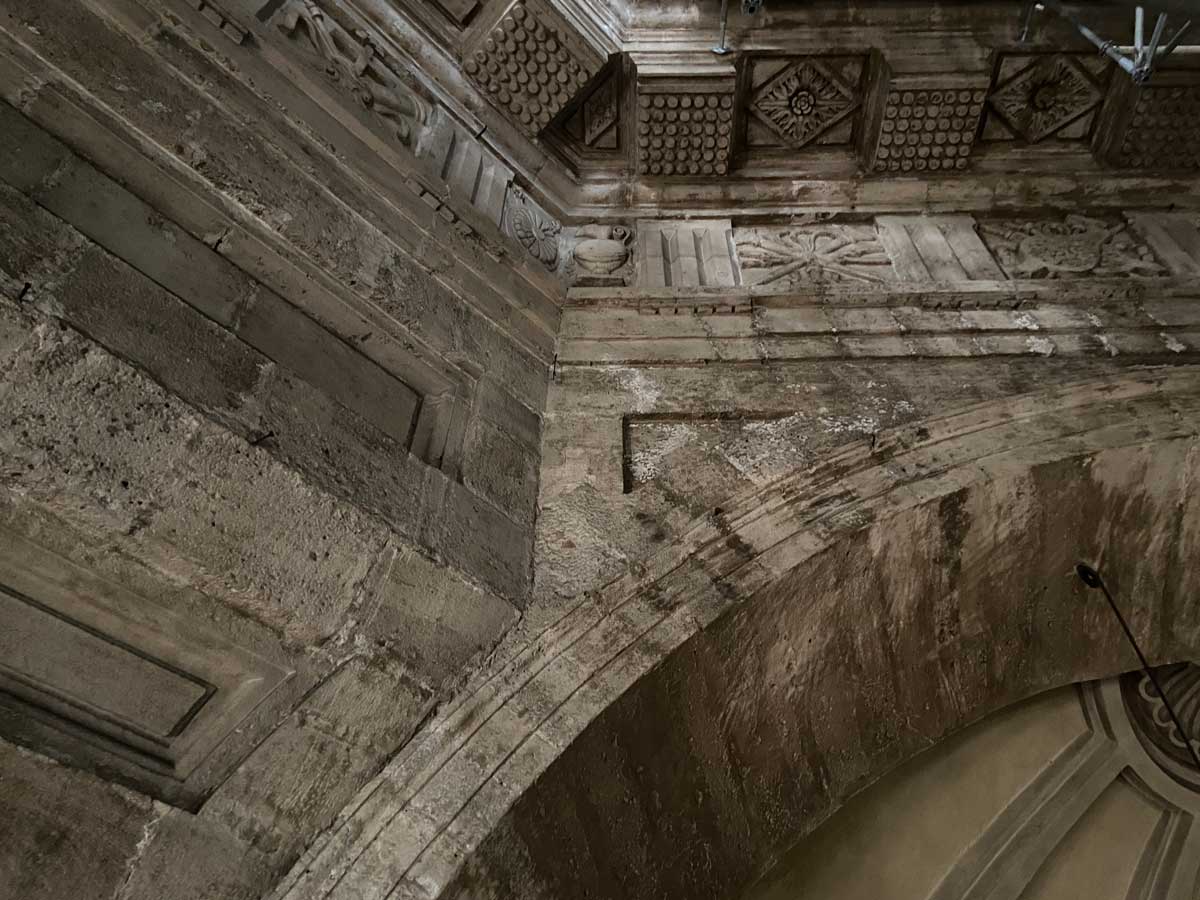
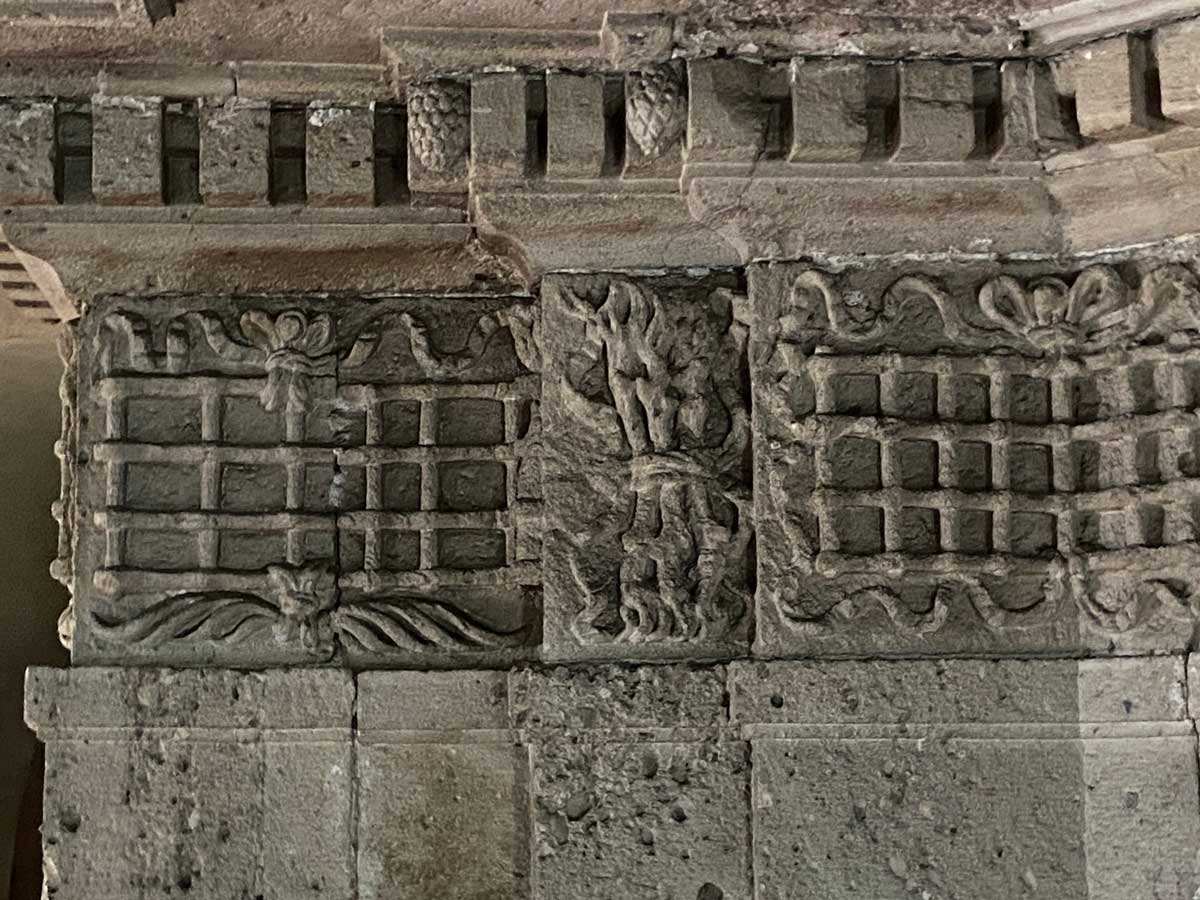
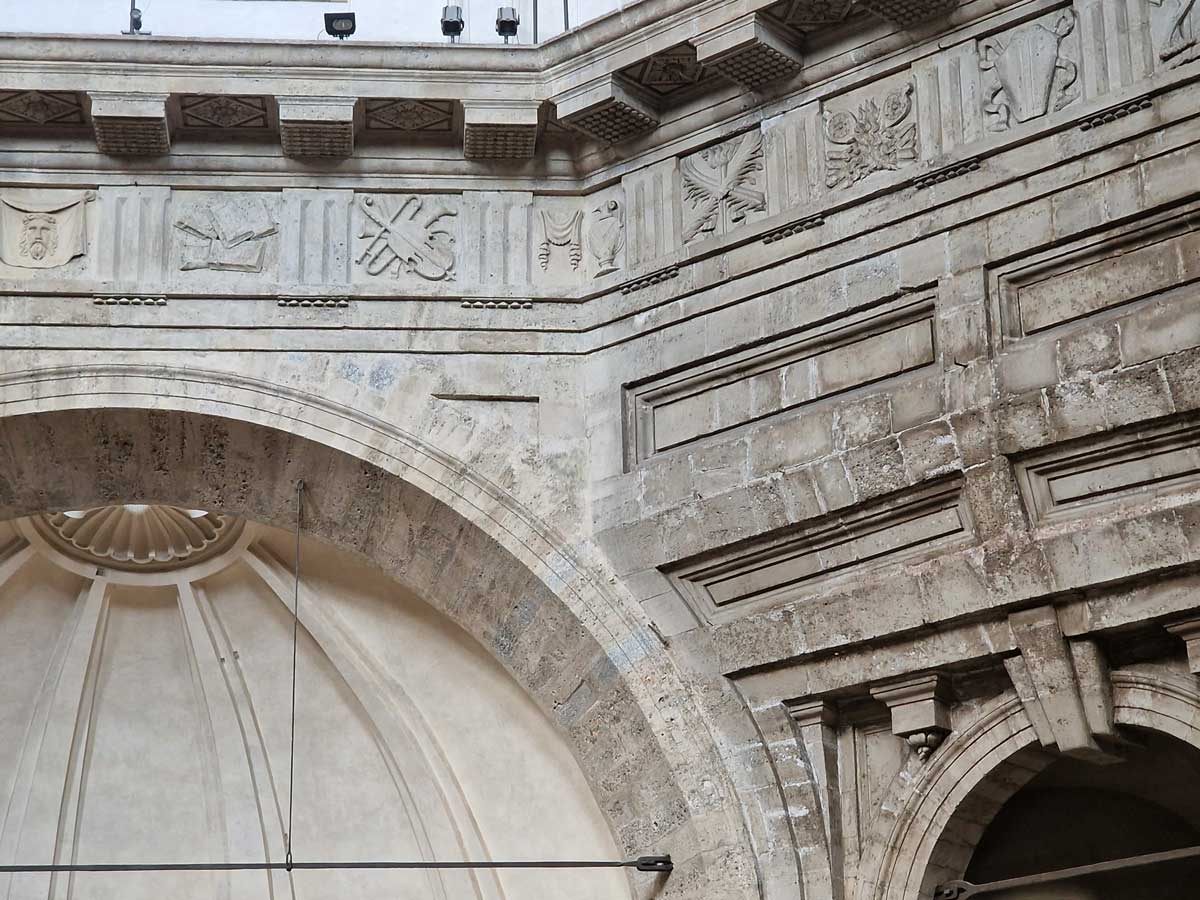
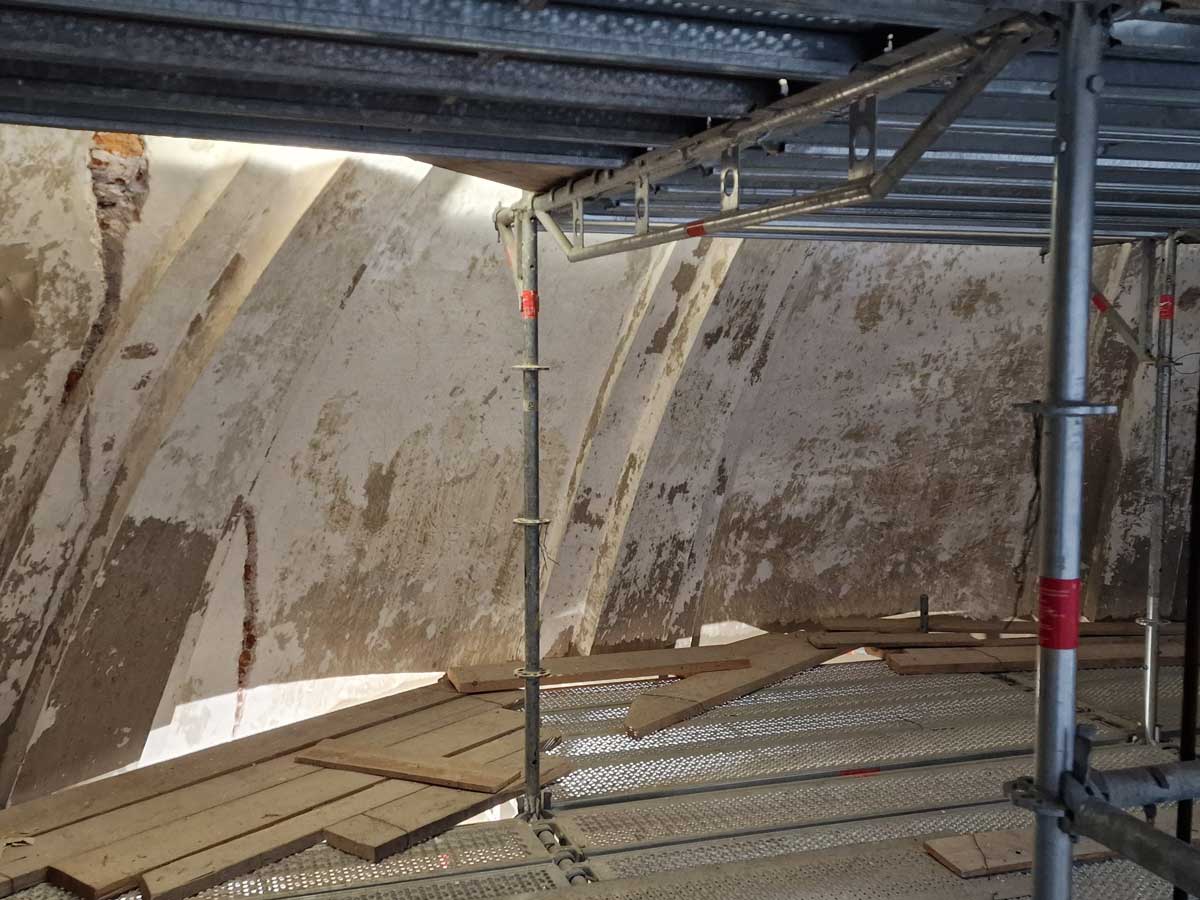
The current dome was built following the collapse of the original Romanesque dome in 1573, caused by structural instability. Reconstruction works began in 1574 and were commissioned by Cardinal Carlo Borromeo, Archbishop of Milan, to the architect Martino Bassi.
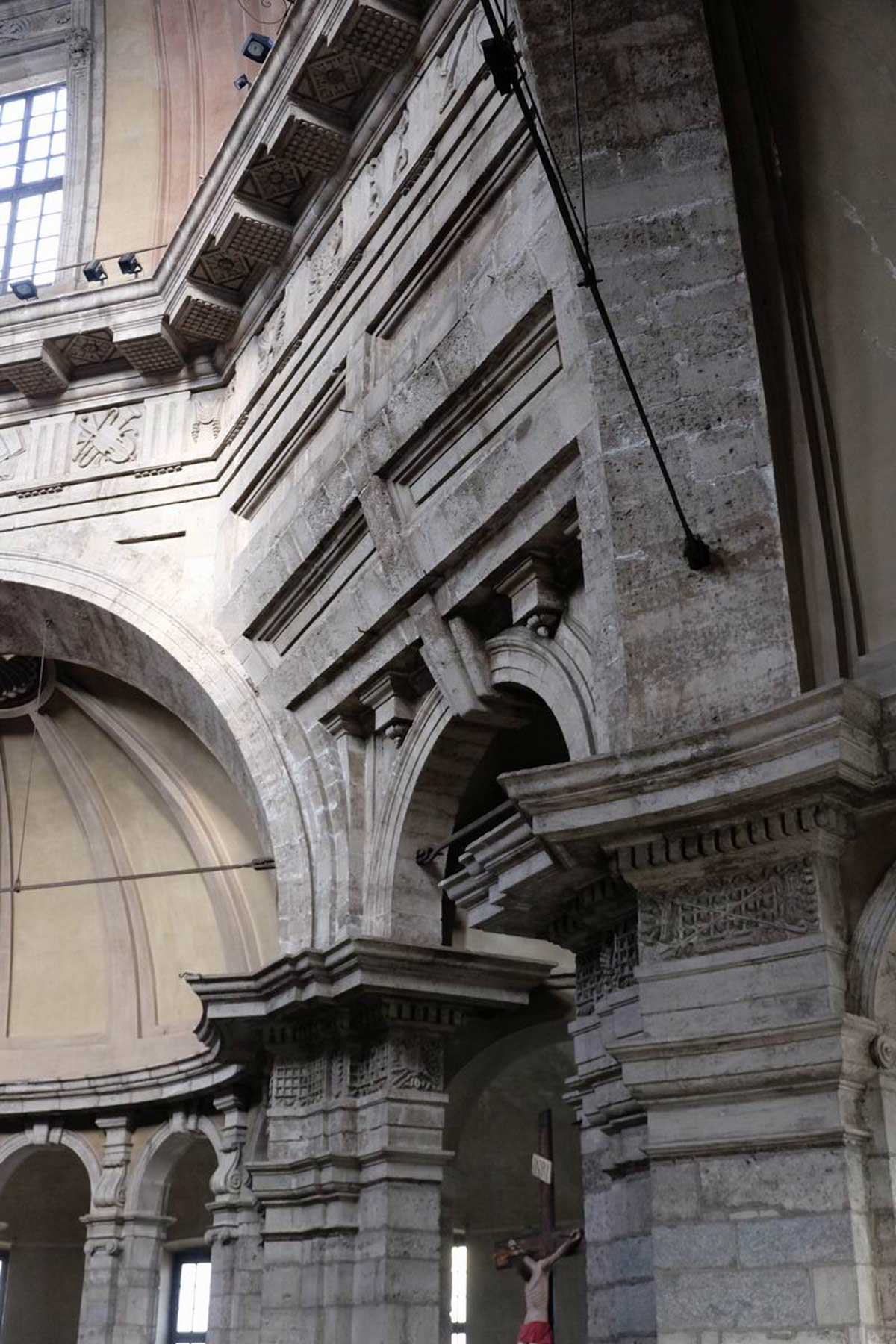
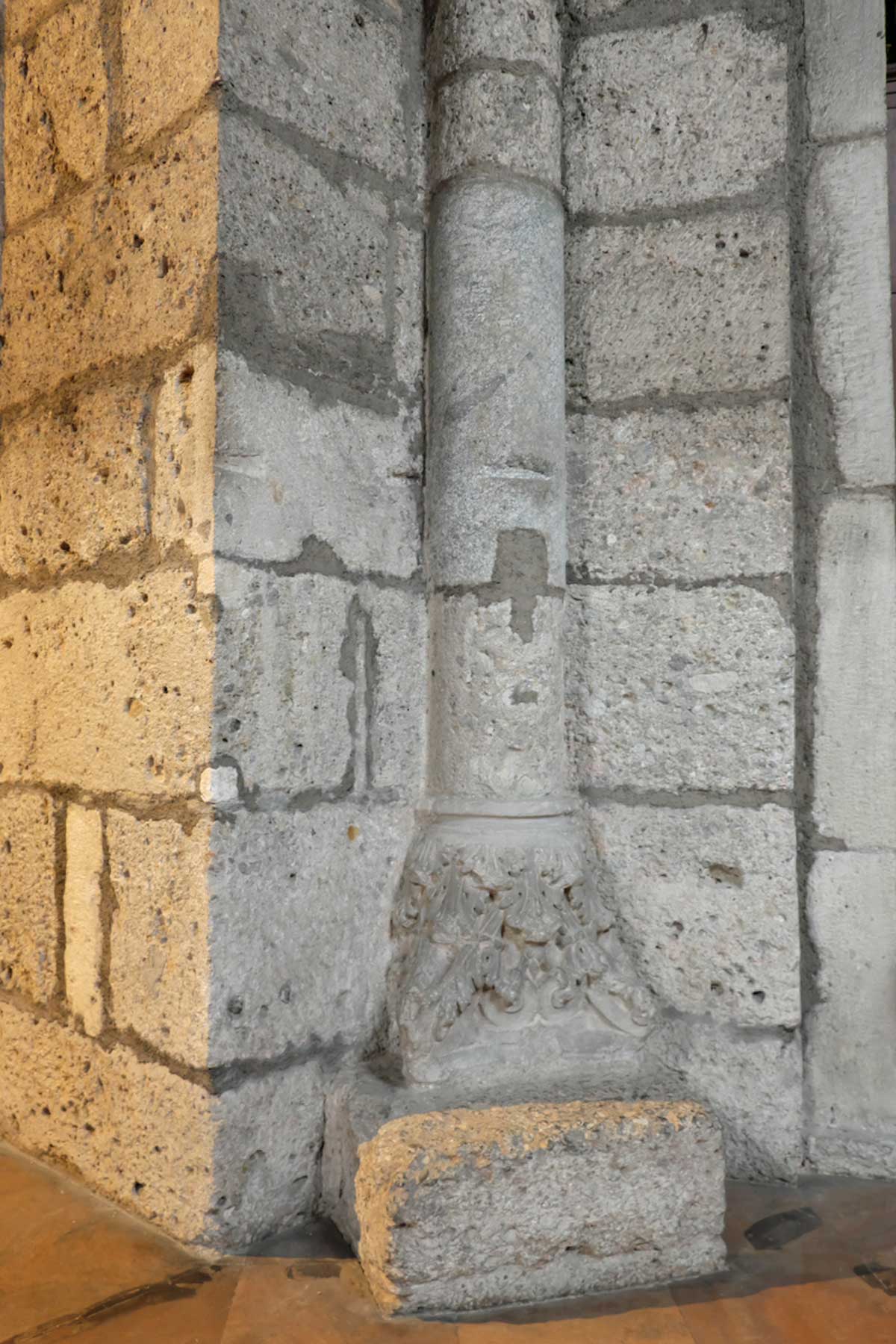
The reconstruction preserved the original Late Antique layout dating back to the end of the 4th century, including the four corner pillars, the exedras and the four towers.
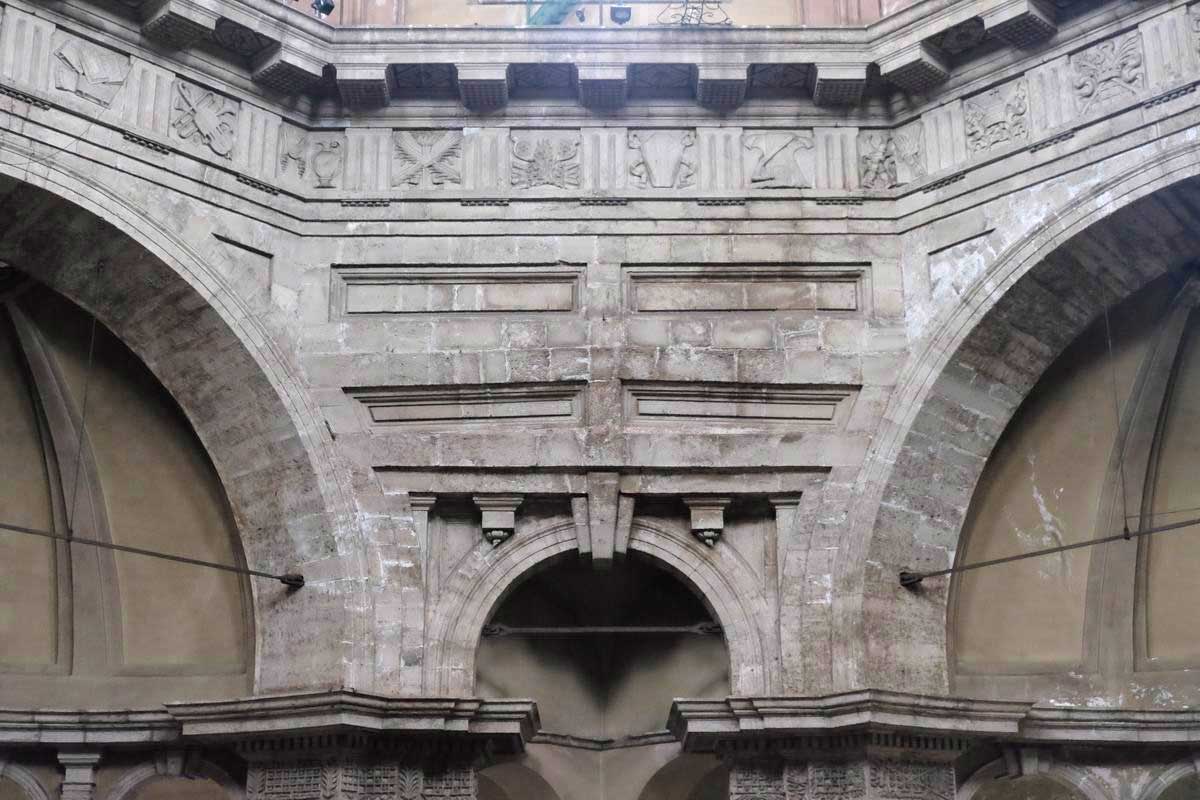
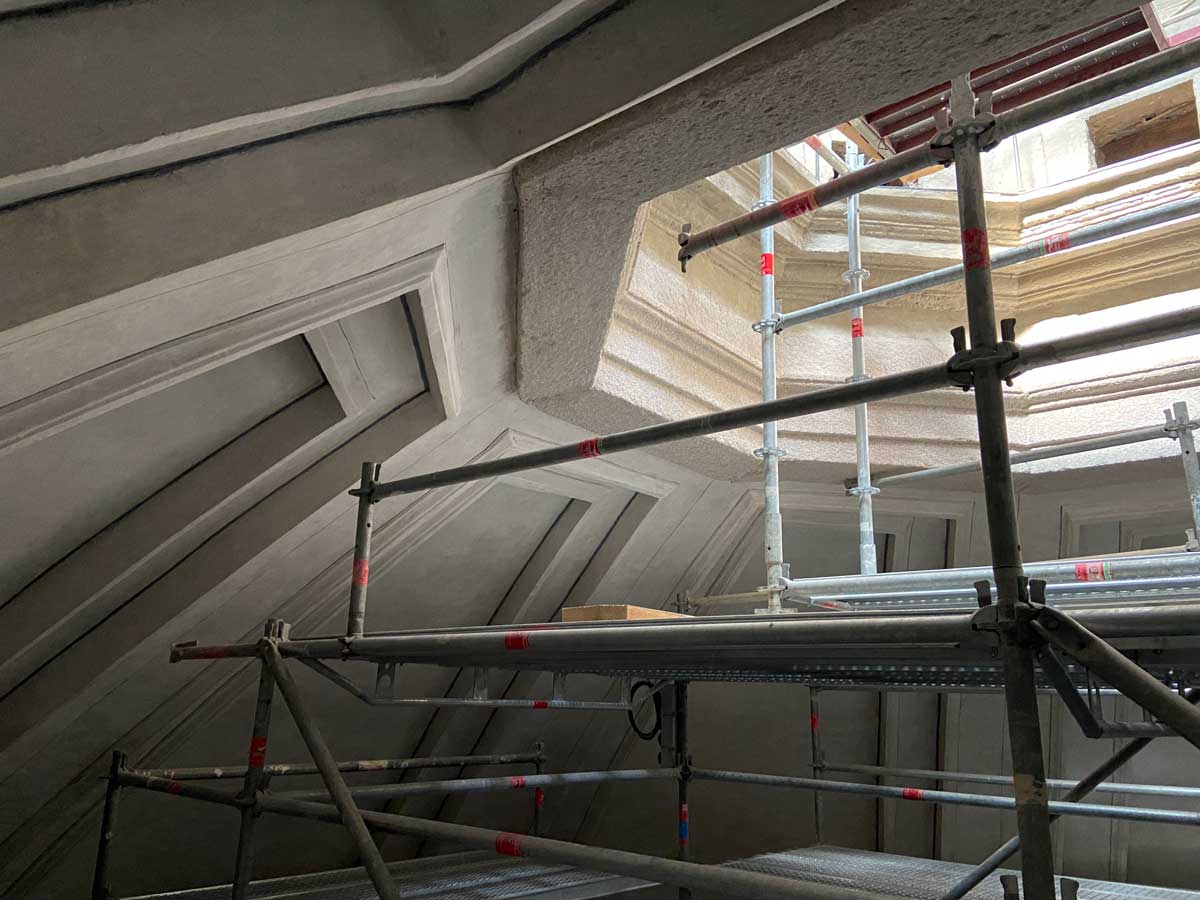
The octagonal dome rests on the four pillars positioned at the corners of the square base of the tetraconch structure.
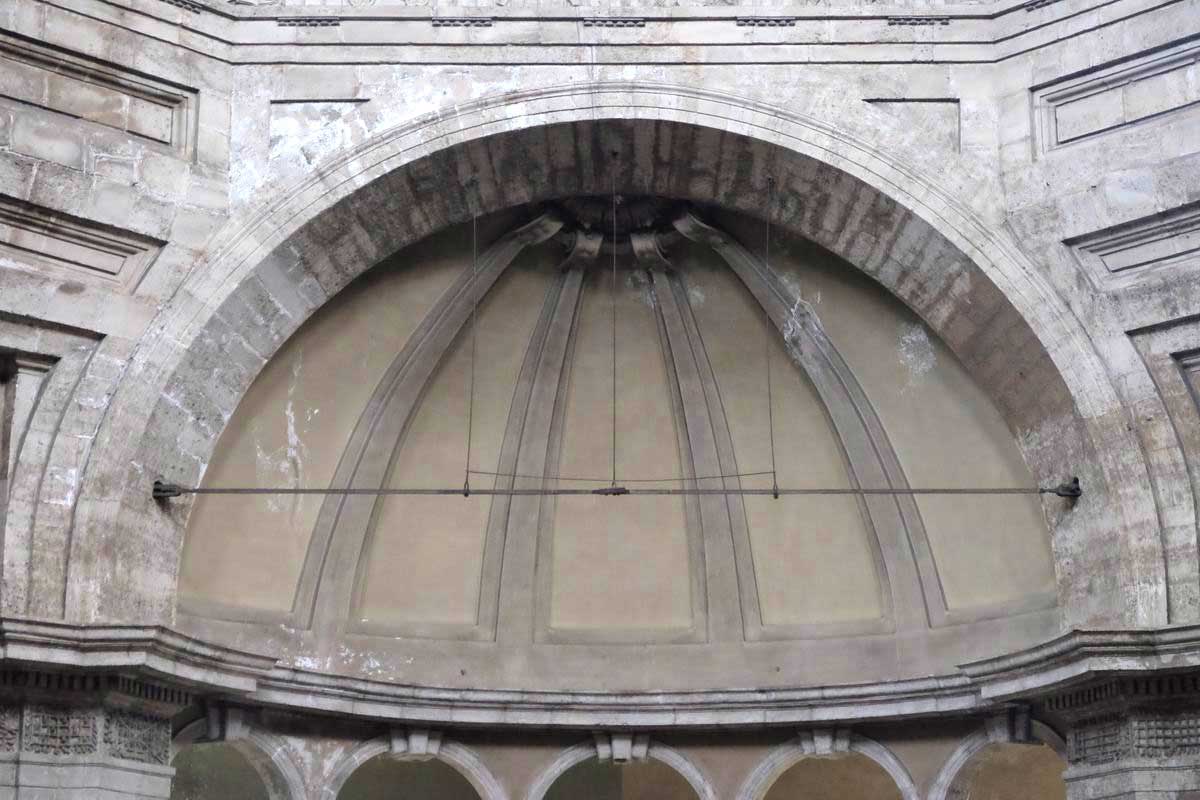
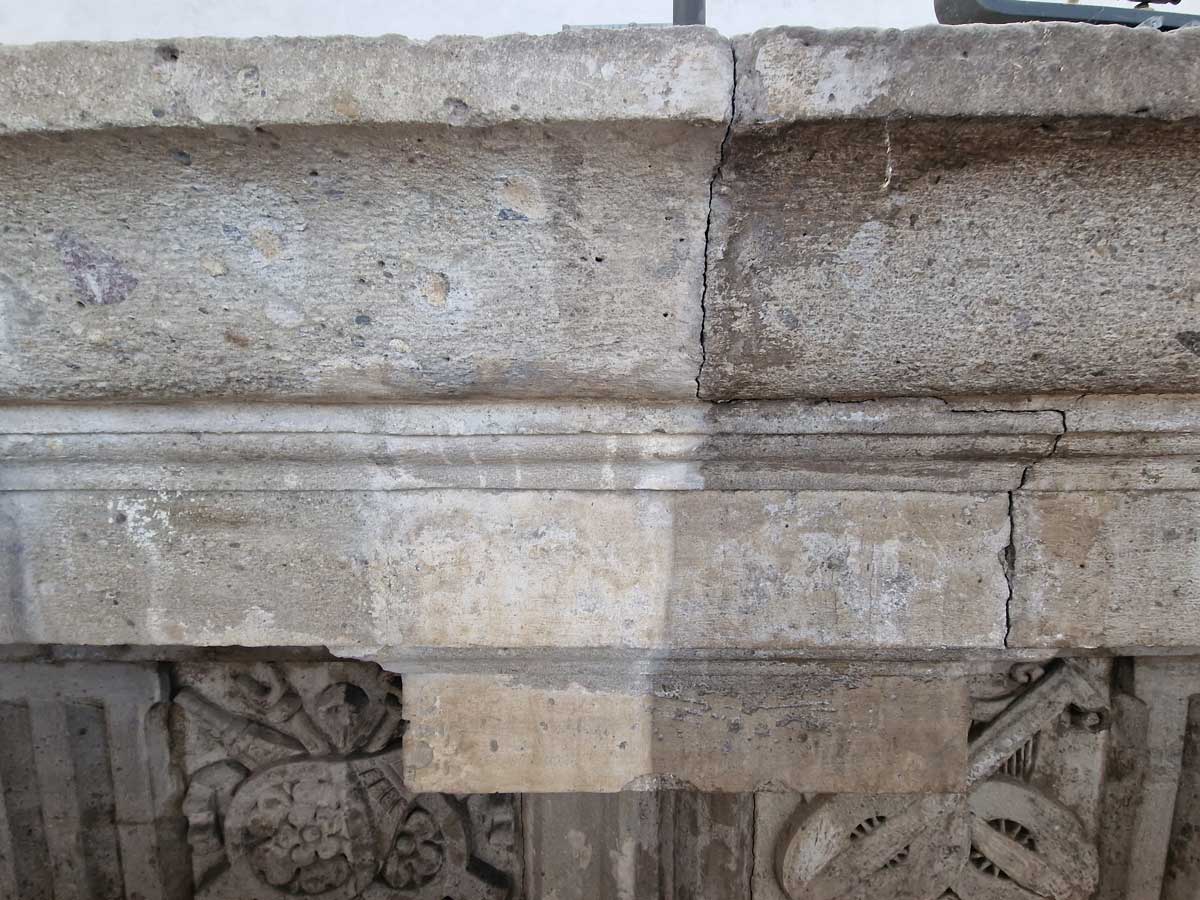
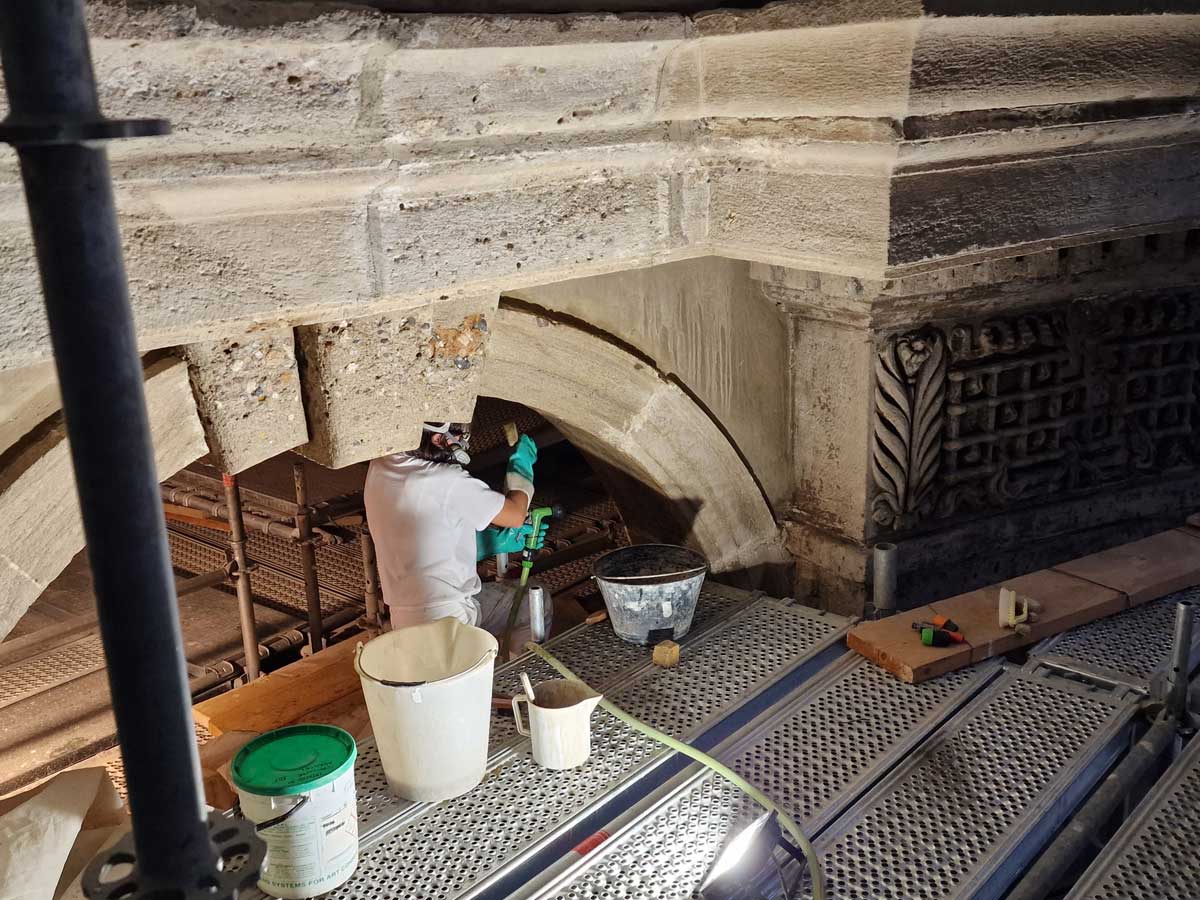
In 1590, the large ceppo stone arches above the four exedras were constructed (the date is visible on one of the voussoirs of the left exedra arch).